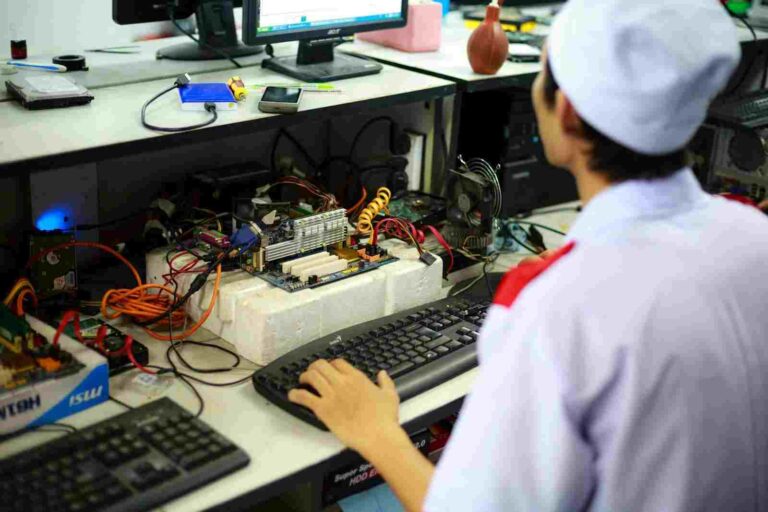
Are there specific types of Dynamics 365 customizations that require more rigorous testing?
The Grand Blueprint: Why Some Changes to a Company’s Digital Brain Need the Brightest Spotlight
Imagine a company as a giant, bustling workshop. It has many different rooms, each with busy people working on important tasks. Some are talking to customers, some are building things, others are keeping track of money. To help all these parts work together smoothly, many companies use a super-smart computer system. Think of it as the workshop’s central brain, helping everyone know what to do and when.
This powerful brain often goes by names like “Dynamics 365.” It’s not just one program; it’s a collection of tools, like a Swiss Army knife for businesses. It helps with talking to customers (that’s the “CRM” part, like a giant Rolodex and calendar combined), and it helps with all the behind-the-scenes stuff like making products and paying bills (that’s the “ERP” part, like a super-organized warehouse manager and accountant).
But what happens when the workshop needs to change? Maybe it wants to sell new things, or maybe it wants to do things in a different, faster way. Just like a real brain, this computer brain, Dynamics 365, can be changed. These changes are called “customizations.” They can be small, like adding a new button, or very big, like teaching the brain a whole new language.
Here’s the big question: When you make changes to something so important, how do you make sure you don’t break it? How do you know the new parts will work perfectly with the old parts? This is where “rigorous testing” comes in. It’s like checking every screw, every wire, and every connection a hundred times before you turn the power on. But not all changes need the same amount of checking. Some changes are like adding a new picture to a wall; others are like rebuilding the very foundations of the building.
Which ones need the most careful, super-duper checking? Let’s take a closer look.
The Heartbeat of the Business: Understanding Dynamics 365
Think of Dynamics 365 as the main engine of a very busy factory. This engine has many parts that do different jobs.
- Customer Relationship Management (CRM): This part helps a company remember every customer, what they bought, what they asked for, and even if they had a good day or a bad day. It’s like a super-powered memory bank for all customer talks and needs. A company knows Jane from Japan likes her tea sweet, and John from London prefers his coffee bitter, all thanks to CRM.
- Enterprise Resource Planning (ERP): This is the part that handles all the serious internal stuff. It helps make sure there are enough parts to build a product, that people get paid, and that things are sent to the right places. It’s like the factory’s nervous system, making sure every gear and pulley works together. It tracks how many widgets are in the warehouse and when to order more.
Together, CRM and ERP help a company run smoothly, like a well-oiled machine humming along. But even the best machines need tweaks and upgrades to keep up with the world.
Why Do Companies Change Their Digital Brains?
The world doesn’t stand still, and neither do businesses. They always want to do things better, faster, or in a new way. So, they “customize” their Dynamics 365 system.
Imagine you have a favorite toy car. Maybe you want to add bigger wheels, or paint it a new color, or even make it fly! These are all customizations. Companies do similar things with their Dynamics 365. They might want to:
- Make it faster: Create a new button that does three steps at once.
- Make it smarter: Teach it to automatically send a “thank you” email after a sale.
- Make it fit better: Change a form so it collects information unique to their business, like whether a customer prefers purple or green widgets.
- Connect it to other toys: Make it talk to their website or their shipping company’s computer.
These changes are meant to make work easier and more efficient. They are exciting! But, as with anything powerful, a small change in the wrong place can cause big problems. And some changes are riskier than others.
The Big Idea: When Changes Need Super Checking
Not all changes are created equal. Adding a new field to a customer’s profile is like adding a new drawer to a filing cabinet. It’s usually safe. But changing how the system calculates prices for every customer? That’s like changing the engine of a car while it’s still moving. It needs a lot more care.
This “extra care” is what we call rigorous testing. It’s not just a quick peek. It’s a deep dive. It’s like having a team of super detectives, putting on their magnifying glasses, and checking everything from every angle. They look for hidden bugs, tiny mistakes, or places where the new change might trip up an old process.
So, when does a change need this super-duper checking? It’s usually when the change touches the core parts of the system, or when it affects many other things. Think about building with dominoes. If you add a single domino on the edge, it’s low risk. But if you change the very first domino in a long, winding line, or one right in the middle, then you need to be very careful. A tiny wobble could knock down the whole chain.
Types of Changes That Need Super Checking
Let’s explore the types of changes that make the super detectives put on their toughest hats.
1. The Brain Surgery Changes: Core System Modifications
Imagine the Dynamics 365 system as the human body. Some parts are like the skin—easy to change or fix. Other parts are like the brain or the heart. Changing these parts is like brain surgery. It’s incredibly complex and needs absolute precision.
When businesses change how the very core of Dynamics 365 works—like altering how sales orders are processed, how money is tracked, or how inventory moves—they are doing “brain surgery.”
- Example: A company decides to completely change how they define a “customer.” Instead of just a name and address, they now want to add a customer’s favorite color, their pet’s name, and their dream vacation spot, and use this information to decide what they get offered. This sounds fun, but it changes how the system sees every customer, everywhere. This could mess up old sales records or how marketing campaigns are sent out.
- Why rigorous testing? Because if you mess up the heart or brain, the whole body stops working. If core business processes break, the company can’t sell, can’t buy, can’t pay. Money stops flowing. People get very upset. The ripple effect can be huge, like a big stone thrown into a quiet pond, sending waves everywhere.
2. The Octopus Arm Changes: Integrations
Imagine Dynamics 365 as a central octopus, with many arms reaching out to other computer systems. One arm might connect to the website, another to the email system, another to the shipping company’s computer. These connections are called “integrations.”
When you change how one of these arms works, or add a new arm, it’s like teaching the octopus a new handshake. You need to make sure the handshake is firm and doesn’t cause the other system to drop what it’s holding.
- Example: A company wants to automatically send customer information from their website straight into Dynamics 365. They build a new “bridge” between the website and the D365 system. But what if the bridge is wobbly? What if some customer names get mixed up, or addresses disappear, or the bridge collapses and no information gets across at all?
- Why rigorous testing? Because data has to flow smoothly and accurately between systems. If information gets lost or corrupted, it’s like a message whispered wrongly down a long line. By the time it reaches the end, it makes no sense. This can lead to wrong orders, forgotten customers, or bills sent to the wrong people. Imagine someone trying to ship a blue dinosaur toy to Mrs. Jones, but the system says she ordered a red elephant!
3. The Robot Helper Changes: Automations
Think of “automations” as little robot helpers inside Dynamics 365. They do tasks automatically without a person having to click a button every time. For instance, when a new customer signs up, a robot helper might automatically send them a welcome email.
When you create new robot helpers or change how existing ones work, you need to be very careful. What if the robot helper gets confused and sends 100 welcome emails instead of one? Or sends a “thank you for your purchase” email before the person even buys anything?
- Example: A company sets up a rule that says: “If a customer buys more than $500, automatically give them a 10% discount.” This sounds great! But what if a tiny mistake in the rule means everyone gets a 10% discount, even if they buy only $10? Or what if it means nobody gets a discount, even if they spend $1000?
- Why rigorous testing? Because robot helpers, while helpful, follow rules exactly. If the rules are wrong, the robots do the wrong thing very quickly and for a lot of people. It’s like setting a clock alarm to go off every minute instead of every morning. Annoying and messy! It can cost a lot of money or make customers very angry. The silent click of a misbehaving automation can echo loudly in a company’s finances.
4. The Data Detective Changes: Data Migrations/Conversions
Sometimes, a company has old information stored
- Example: A company has 20 years of customer records in an old, dusty database. They want to move all of this important history—names, addresses, past purchases—into their shiny new Dynamics 365 system. But what if during the move, some addresses get jumbled, or customer names are cut short, or all the old purchase dates become “January 1, 1900”?
- Why rigorous testing? Because data is the lifeblood of a business. It’s the history, the memory, the very truth of what happened. If the data is wrong, everything built on that data will be wrong. Imagine trying to call a customer from your new phone, but their number got mixed up when you moved it from your old phone! Or trying to figure out if someone paid their bill, but the payment records are all gone. This can make companies lose trust from customers and even face legal trouble. The feeling of dread when you realize important information has vanished is palpable.
5. The Secret Language Changes: Complex Code/Plugins
Sometimes, to make Dynamics 365 do something very special, experts have to write new “code.” This is like writing a secret recipe for the computer brain to follow. These bits of custom code are often called “plugins” or “extensions.”
- Example: A company needs Dynamics 365 to calculate a very specific, complicated sales tax that changes based on the moon phase and the customer’s shoe size (okay, maybe not that silly, but you get the idea!). This requires a programmer to write brand-new, complex code. What if there’s a tiny typo in the code? It might seem harmless, like one wrong letter, but it can stop the whole system in its tracks or make it calculate the tax completely wrong.
- Why rigorous testing? Because code is like a precise instruction manual. One wrong word can lead to big problems. If the code breaks, it can slow down the system, make it crash, or give wrong results. It’s like trying to bake a cake with a recipe that says “add two cups of salt” instead of “two cups of sugar.” The result is a disaster! The silent hum of busy servers can turn into a cold, hard silence.
6. The Big Picture Changes: Upgrades
Every now and then, Microsoft, the company that makes Dynamics 365, releases a brand-new, updated version. This is like getting a brand-new model of your favorite toy car, with shinier paint and a faster engine. When a company moves from an old version to a new one, it’s called an “upgrade.”
- Example: A company has been using Dynamics 365 for five years, and now they want to upgrade to the latest version. This new version has many exciting features, but it might also change some things about how the old system worked. What if a custom button they added five years ago doesn’t work with the new version? Or what if a report they used every day suddenly looks different or is gone?
- Why rigorous testing? Because new versions can sometimes clash with old customizations. It’s like putting an old, special engine part into a brand-new car model—it might not fit, or it might break something else. Testing ensures that all the old, important custom pieces still work perfectly with the new system. It’s about preserving the past while embracing the future.
Why Do These Changes Need More Care? The Consequences
If these specific types of changes aren’t checked very, very carefully, the results can be painful.
- Lost Money: If sales calculations are wrong, or customers get discounts they shouldn’t, or if the system can’t process orders, a company loses money. Lots of money. It’s like watching coins slip through holes in your pocket.
- Angry Customers: If orders are wrong, or emails aren’t sent, or customer information gets lost, people get frustrated. They might stop buying from that company. The feeling of being ignored or misunderstood can really sting.
- Frustrated Employees: Imagine trying to do your job when the computer system keeps crashing, or giving you wrong information, or slowing down to a crawl. It’s like trying to run a race with your shoelaces tied together. People get stressed and unhappy.
- Damaged Trust: When a system breaks, people lose faith in it. They wonder if the company knows what it’s doing. Trust, once broken, is very hard to rebuild. It’s a delicate, shimmering thing that can shatter like glass.
How We Test Them (Simplified)
So, how do the super detectives perform their rigorous testing? They use different methods, like:
- Checking Each Step: They pretend to be a customer or an employee and go through every step of a process, clicking every button, typing in every box, just to make sure it works as planned. “Click. Click. Does it do what it’s supposed to? Yes!”
- Trying Wrong Things: They deliberately try to do things wrong, like typing letters where numbers should be, or skipping steps, just to see if the system can handle it without breaking. “What if I try to order negative bananas? Uh oh, system crash!”
- Using Lots of Data: They feed the system tons of pretend information—thousands of customers, millions of sales—to see if it can handle the load without slowing down or making mistakes. It’s like seeing if a bridge can hold a million cars.
- Talking to Everyone: They talk to the people who will actually use the system every day to make sure the new changes make sense to them and help them do their jobs. Because if it makes no sense to the user, it makes no sense at all.
The Human Side of It All
Behind every computer system, there are real people. They feel happy when things work smoothly, and frustrated when things break.
When a company builds a new feature in Dynamics 365, it’s often to make someone’s job easier, or to serve a customer better. But if that new feature isn’t tested carefully, it can cause more problems than it solves. It can make a smooth workflow suddenly feel like a bumpy, rocky road.
The people who build these systems have a big responsibility. They are like architects and builders for the digital world. Just as a builder must ensure a house won’t fall down, those who customize Dynamics 365 must ensure the digital “house” is strong and reliable. This requires not just smarts, but a deep sense of care and responsibility. The ethics of building robust, reliable systems are about protecting the people who use them and the businesses that depend on them. It’s about being truly helpful.
Lessons from the Past
Long, long ago, computer systems were much simpler. People made changes, and if something broke, it might only affect a few people. But as systems grew bigger, and connected to more and more things, people learned a hard lesson: a small mistake could cause a huge mess.
There have been many stories, not just in business, but in rockets and planes, where tiny errors in computer code led to big problems. These experiences taught us the immense value of checking, double-checking, and triple-checking everything, especially the most important parts. The wisdom gathered from past mistakes lights the path for future successes. It taught us that a smooth flow is worth every moment of careful preparation.
Peering into Tomorrow
What does the future hold for Dynamics 365 and all its amazing customizations? We’ll see even smarter robot helpers (Artificial Intelligence and Machine Learning) that can learn and adapt. These new tools will bring incredible power, but also new challenges.
Imagine a system that can predict what a customer wants before they even know it! That sounds amazing. But it will mean that the “brains” of these systems will be even more complex. And the need for super-duper, rigorous testing will become even more important. We will need to test not just if the system works, but if it works in a way that is fair, smart, and truly helpful to people. Will the system remember what it means to be truly useful, not just powerful?
The future will require us to build not just with cleverness, but with caution and compassion. It means ensuring that every click and every line of code adds to the harmony of how businesses operate, rather than creating a dissonant clang.
A Strong Digital Foundation
In the busy, ever-changing world of business, the computer systems that run everything are like the very foundations of a building. Dynamics 365 is one of these crucial foundations. When companies decide to make changes to it, especially the big, important ones that touch the heart of the system, connect to other systems, or automate key tasks, they must remember the importance of rigorous testing.
It’s not just about fixing bugs; it’s about preventing them from ever appearing. It’s about protecting the business, keeping customers happy, and making sure the people who work there can do their jobs smoothly and with confidence. A well-tested system feels solid, dependable, like a friendly hand reaching out to help. It allows businesses to grow and change without fear, knowing that their digital brain is strong and reliable, humming along like a perfectly tuned engine.
So, the next time you hear about a company making changes to its computer systems, remember the super detectives of testing. They’re the ones making sure the grand blueprint of the digital future is built on the strongest, most carefully checked foundation possible.