Can a new feature help me access information faster and more efficiently?
The Swift Current of Knowledge: How Smart Tools are Guiding Our Minds to What We Seek
What does it truly mean to know something? Since the dawn of time, people have looked for answers. They have explored the world, watched the stars, and listened to the whispers of elders. The need to find things out, to gather facts, and to understand has always been a powerful human drive. But the way we find those answers, the path we take to knowledge, has changed greatly over the years. We used to walk a long, slow road. Now, it seems, we are traveling on a swift river, pushed along by new and clever tools.
Imagine wanting to know how far away the moon is. A long time ago, a person would need to study for years, maybe even travel to find rare books or wise teachers. The search itself was a journey, full of dusty scrolls and quiet contemplation. Today, that information is just a few quick taps or a spoken question away. This big change, this leap from slow discovery to instant knowing, is thanks to something we can call a “new feature.” It is not just one simple button; it is a whole world of smart helpers that make finding information faster and better than ever before. It is about getting the right facts, at the right moment, in a way that just makes sense.
This journey to faster knowing has been a long one, stretching back through history. Each step along the way has brought new ways to store and share what we learn. And now, the pace is picking up, making us wonder what the future holds for how we think and learn.
The Ancient Echoes of Curiosity: A Journey Through Time
Humans have always been seekers. It is deep in our bones. We ask questions: “Why does the sun rise?” “How can we build a stronger house?” “What is beyond that mountain?” For thousands of years, answering these questions was a grand, slow adventure.
Think about a time long, long ago. There were no computers, no phones, not even printed books. If you wanted to learn about history or the stars, you might listen to stories told around a crackling fire. You might visit a very special place where wise people kept knowledge written on stone tablets or on long, rolled-up pieces of paper called scrolls. Imagine the weight of those scrolls in your hands, the dry, papery smell, the quiet rustle as you carefully unrolled them. Each word was precious, each fact hard-won. Finding just one piece of information could take days, even weeks. It was a treasure hunt, and the treasures were words.
Later, in different parts of the world, people began to gather these scrolls and writings into great libraries. These were not just buildings; they were sacred places, filled with the quiet hum of minds at work. Walking into such a library, you might feel a cool breeze from ancient stone, and see sunlight filtering through high windows, lighting up dust motes dancing in the air. Each scroll, each book, held secrets waiting to be found. But even then, if you wanted to find something specific, you had to search by hand, page by page, sometimes for hours. It was a patient pursuit, a test of will.
Then came a truly groundbreaking “new feature” that changed everything: the printing press. Before this invention, every single book had to be copied by hand. Can you imagine? It was a slow, tiring job, and it meant that books were very rare and very expensive. Only a few people could ever own them. But with the printing press, many copies of the same book could be made quickly. This was a revolution! Suddenly, knowledge could spread like wildfire, moving faster than ever before. More people could read, more people could learn, and more ideas could bloom. It was like going from sending messages by foot to sending them on horseback. The world felt smaller, and minds felt bigger. This invention, centuries ago, showed us the power of a “new feature” to transform how we access information. It made knowledge a bit more like a flowing stream instead of a hidden spring.
The Great Digital Awakening: From Keywords to Connections
Fast forward many, many years. The printing press was still amazing, but humanity was ready for an even bigger leap. That leap came with the invention of computers and, soon after, the internet. Imagine a world where every book ever printed, every newspaper, every map, and every idea could be stored in one giant, invisible library, ready to be called up on a screen. That was the dream, and it started to become real.
At first, finding things on the internet was like exploring a messy attic. You had to know exactly what you were looking for and where it might be. Then came the first true “new features” of the digital age: search engines. These were like super-fast librarians who could look through millions of pages in seconds. You typed in a few keywords, like “how far is the moon,” and poof! A list of websites would appear.
This was wonderful, truly. It saved so much time. But as the internet grew, it became a vast ocean of information. It was like trying to drink from a fire hose! There was so much noise, so many different answers, that it could be hard to tell what was true, what was important, or even what you really needed. You might type “apple,” and get information about the fruit, the computer company, or even a city. The first search engines were good, but they were still quite simple, mostly matching words. They didn’t really understand what you meant.
This led to the next big leap. People started asking: Can our “new features” get even smarter? Can they not just find words, but also understand the meaning behind them? Can they learn what we like, what we need, and even guess what we’re going to ask next? This was the beginning of a different kind of “new feature” – one that focused on connections, not just keywords.
The Clever Helpers: How Today’s “New Features” Really Work
Today, the “new features” that help us find information are much more clever. They are like personal assistants who really try to understand you. They don’t just match words; they try to understand your thoughts and needs.
Think about these clever helpers:
- Smart Suggestions (Predictive Text): Have you ever started typing a question into a search bar, and before you finish, the computer already suggests the rest of your question? It is like a friendly mind-reader! These smart suggestions are a “new feature” that learns from what many people type. They guess what you are trying to say, helping you get to your answer even faster. It saves little bits of time, which add up to a lot.
- Personalized Feeds: When you open a news app or a video site, why does it seem to know just the stories or videos you might like? This is another “new feature” at work. These systems learn from what you have looked at before, what you have clicked on, or even how long you have watched something. They create a special, unique stream of information just for you. It is like having a personal librarian who not only knows your favorite books but also knows what new authors you might enjoy, even before you do. This can make finding new and interesting things much easier.
- Voice Assistants: Imagine just speaking your question out loud, like you are talking to a friend, and a device answers you instantly. “How tall is Mount Fuji?” you ask, and a calm voice gives you the answer. These voice assistants are powerful “new features” that understand spoken language. They connect to vast amounts of information and translate your spoken words into searches. It is like having a genie of knowledge right there in your home, ready to grant your informational wishes.
- AI-Powered Search: This is perhaps the most exciting “new feature” of all. Modern search is not just about finding words. It uses something called Artificial Intelligence (AI), which sounds complex but can be thought of as very, very smart computer programs that learn. These programs can:
- Understand Meaning: If you ask, “What is the best way to grow tomatoes in a small garden?” older search engines might just look for “grow tomatoes.” But an AI-powered search can understand that you need advice for a small garden, and it might suggest things like container gardening or specific types of tomatoes. It looks at the whole question, not just keywords.
- Summarize Information: Sometimes, a “new feature” can even read long articles for you and give you a quick summary. Imagine you need to understand a very big, complicated topic, like how a volcano erupts. Instead of reading a whole book, a smart tool can pull out the most important facts and explain them simply. It is like having a brilliant tutor who can break down tough ideas into bite-sized pieces.
- Find Hidden Connections: These smart tools can look at millions of pieces of information and find patterns or connections that a human might never see. They can link ideas from different fields, helping people discover new solutions to old problems.
How do these computers “think”? They do not think like humans do. They do not have feelings or ideas. Instead, they follow incredibly complex sets of rules, called algorithms, and they learn by looking at huge amounts of information. They are like super-fast pattern detectors. When they see a pattern enough times, they learn from it. For example, if many people who search for “rainy day activities” also click on articles about “indoor games,” the computer learns to connect those two ideas. It is like watching someone play a game over and over and figuring out the rules. The more information they see, the “smarter” they seem to become.
Consider a student named Kenji, who is working on a school project about the history of space travel. In the past, Kenji would spend hours at the library, pulling out
1. Ask a complex question: “Tell me about the main challenges faced by early astronauts and how they overcame them.”
2. Get a summarized answer: A smart tool might quickly pull together facts from many different sources, explaining the challenges (like limited oxygen or dangers of re-entry) and the solutions (like new life support systems or heat shields).
3. Explore related topics: The tool might suggest other interesting areas, like the role of rockets or the first animals in space, helping Kenji learn even more.
This is not just faster; it is also a deeper, more connected way of learning. It changes the experience of discovering facts from a slow dig to a quick, clear view.
The Sweet Promise: What Faster Information Means for Us
When we can get information faster and more efficiently, it changes our lives in wonderful ways. These “new features” offer us many sweet promises:
- Saving Time: This is obvious, but hugely important. Think of all the minutes, hours, and days saved that would otherwise be spent searching. This extra time can be used for so many other things: spending time with family, pursuing a hobby, creating something new, or simply enjoying a quiet moment. It gives us back precious parts of our lives.
- Learning Made Easier: Complex ideas can often be broken down into simple terms by these smart tools. If you are trying to understand something difficult, like how the human heart works, a “new feature” can show you a clear diagram, explain each part in simple words, or even present a short video. It is like having a patient teacher available 24 hours a day, always ready to explain something just one more time. This makes learning less scary and more fun.
- Better Decisions: Whether it is choosing the best type of plant for a sunny window or deciding which path to take for a big life goal, having quick access to facts can lead to better choices. When you have all the pieces of the puzzle, the picture becomes clearer. These “new features” help us gather those pieces quickly, so we can see the whole picture before we act.
- Discovering New Things: Sometimes, the best part of these smart tools is finding something you were not even looking for. Like opening a door to one room and finding a hallway full of new, interesting doors. Because these “new features” connect ideas and learn your interests, they can suggest books, articles, or videos you never would have found on your own. This can spark new hobbies, new passions, or even new ways of thinking about the world.
- Empowering Everyone: In the past, access to information was often limited to certain people or certain places. But with these digital “new features,” knowledge can be shared more widely than ever before. A child in a small village, with access to a simple device, can learn about the universe, just like a university professor. This levels the playing field, giving more people the power that comes with knowledge, no matter where they are or what their background is. It can help people learn new skills for jobs, understand health issues, or just explore their curiosity.
The Quiet Shadows: Challenges and Deep Thoughts
While these “new features” bring many bright benefits, they also cast some quiet shadows. It is important to think deeply about these challenges, because how we use these powerful tools shapes our future.
- Information Overload: Even if information is easy to find, there can be too much of it. Imagine standing in a giant room filled with every book ever written, all open at once. It can be overwhelming. These “new features” help us find specific things, but sometimes we still feel swamped by the sheer volume of facts, opinions, and news constantly flooding our senses. It can feel like too much noise, making it hard to focus on what truly matters.
- The Echo Chamber (Filter Bubbles): Remember how personalized feeds learn what you like? While this can be helpful, it can also create something called an “echo chamber” or “filter bubble.” This means you mostly see information that already agrees with your ideas or interests. It is like being in a room where everyone says the same thing. You might not hear new ideas or different opinions, which can make it harder to understand other people or new ways of thinking. How do we make sure we still bump into new ideas, even when our tools are designed to show us what’s comfortable?
- Truth and Lies: When information travels so fast, it can be hard to tell what is real and what is not. Fake stories can spread quickly, looking very real. These “new features” help us find facts, but they can also sometimes help spread things that are not true, if the system is not careful. We must learn to be detectives, always asking questions and looking for proof, even when information comes to us instantly.
- Who Decides What We See? These “new features” are built by people, with rules and goals set by those people. This means that someone, somewhere, is deciding what information gets shown more often, and what gets hidden. This raises important ethical questions: Who should decide what is important? How do we make sure these tools are fair to everyone? How can we make sure they do not accidentally (or purposefully) show us only one side of a story? The choices made by a few can shape the understanding of many.
- Losing Our Way? With information so readily available, are we losing the skill of deep thought? If a “new feature” can answer any question in seconds, do we still try to figure things out for ourselves? Do we still sit and ponder, or do we just ask the machine? The human mind needs to stretch and struggle a bit to truly grow. We must be careful not to rely so much on these smart tools that we lose our own ability to think critically, to wonder, and to make our own connections. The act of searching, of wrestling with a question, can itself be a valuable part of learning. The quiet journey to knowledge, though slower, often builds strength in the mind.
Looking Through the Crystal Ball: What Comes Next?
What will the “new features” of tomorrow look like? It is exciting, and perhaps a little bit mysterious, to imagine.
We might see even smarter assistants that understand us so well, they feel less like tools and more like helpful friends. They might anticipate our needs before we even ask, quietly suggesting a recipe because they know we are trying a new type of cooking, or reminding us of a fact needed for a project before we sit down to work.
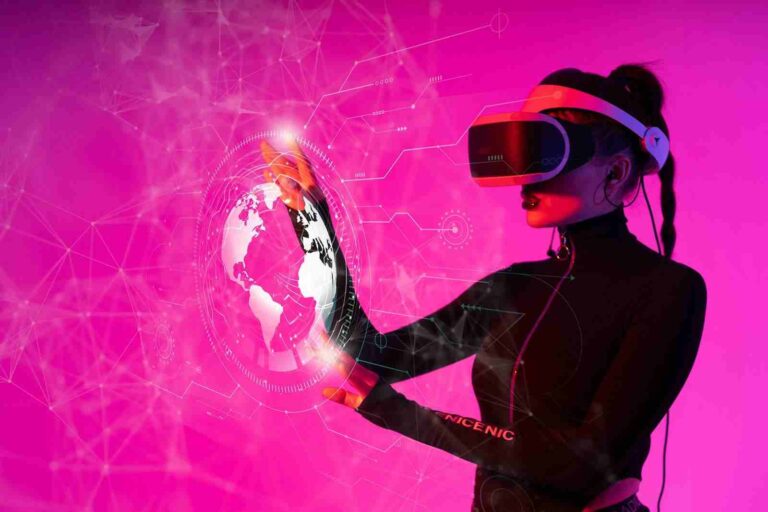
Imagine visual and immersive information. Instead of just reading about a rainforest, you might step into a virtual rainforest through a special headset. You could learn about the trees and animals by “walking” among them. Or, by pointing your phone at a building, you might see facts about its history appear right on the screen, mixed with the real world around you. This is called augmented reality, and it could make learning incredibly vivid and real.
And looking far into the future, some people even dream of brain-computer connections, where information could flow almost directly into our minds, or where we could simply “think” a question and get an answer. While this might sound like something from a science fiction movie, it shows how deeply we want to connect with knowledge, to make it part of us.
No matter how advanced these “new features” become, one thing will always remain crucial: the human touch. These tools are powerful, yes, but they are just tools. They can gather facts, but they cannot feel joy or sorrow. They can suggest answers, but they cannot truly understand compassion or wisdom in the way a person can. We will always need human curiosity to ask the first questions, human creativity to use the information in new ways, and human empathy to decide how these tools should be built and used for the good of everyone. The true power does not lie in the speed of the “new feature” itself, but in the intelligent, thoughtful hands that guide it. The path forward is about learning to dance with these smart tools, letting them help us reach new heights, but always remembering what makes us uniquely human.
Key Takeaways & A Lasting Reflection
The journey of human knowledge has been a long and winding road, from the quiet rustle of ancient scrolls to the silent whir of today’s clever computers. Each “new feature,” from the printing press to today’s AI-powered search, has changed the way we access information, making it faster, easier, and more widely available.
Here are the most important things to remember:
- We have always sought knowledge: It is a deep part of being human.
- “New features” are powerful tools: They help us save time, learn more easily, make better decisions, and discover new things.
- These tools learn: They are designed to understand what we mean, not just what we say, by finding patterns in vast amounts of information.
- We must use them wisely: While they offer great promise, we also need to be careful about information overload, filter bubbles, telling truth from lies, and making sure we continue to think for ourselves.
- The future is bright, but human wisdom is key: These tools will only get smarter, offering new ways to learn and connect. But our human qualities – our curiosity, our critical thinking, our ability to feel and understand deeply – will always be the most important part of the journey.
So, as we ride this swift current of knowledge, powered by amazing “new features,” let us not forget the quiet strength of the past, the value of deep thought, and the unending wonder that drives us to ask questions. The true magic is not just in how fast we find the answers, but in what we choose to do with the knowledge once it is in our hands. The journey of understanding is an endless one, and these new tools are simply helping us explore more of its beautiful, complex landscape.