Can Deploying PCF Controls help a teacher’s Power App quickly get new interactive tools for student engagement?
Smart Tools, Engaged Minds: PCF Controls for Teachers’ Power Apps
The classroom is changing. Once, learning happened with chalkboards and books. Students sat quietly, listening to a teacher explain things. It was a good way to learn, full of human connection and the quiet turning of pages. But today, the world outside the classroom buzzes with bright screens, quick videos, and games. Children are used to things moving fast. They like to touch and swipe, to make things happen with a tap.
This new world brings a big challenge for teachers. How can they keep students focused and excited when digital distractions are everywhere? How can they make learning feel as lively as the world outside? Teachers want to make every lesson sparkle. They want to see students’ eyes light up with understanding and curiosity. They need tools that do more than just show words. They need tools that let students do things, explore things, and truly interact.
This is where a special kind of digital helper, called a PCF control, steps onto the stage. Imagine a teacher using a Power App to create a lesson. A Power App is like a custom digital binder or a special notebook. Usually, it comes with certain basic tools: places to type words, buttons to click, or boxes to check. These are helpful, but sometimes, a teacher needs something more. They need a tool that can do a special trick, something the basic tools cannot. PCF controls are those special tricks. They are like magic wands that can add new, amazing features to a teacher’s Power App, making learning suddenly much more engaging for every student.
What Exactly Are PCF Controls? Think of Them as Super Tools
Imagine you are building a LEGO castle. The basic LEGO set has standard bricks, windows, and doors. You can build many things with them. But what if you wanted a special, moving drawbridge? Or a secret trapdoor that actually spins? The regular LEGOs might not have these.
PCF controls are like those special, custom LEGO pieces for digital apps. “PCF” stands for Power Apps Component Framework. It sounds like a mouthful, but it just means a way to build custom parts for apps. Think of a Power App as a digital canvas or a digital building kit. Most of the time, teachers can make wonderful apps using the standard tools that come with Power Apps. These tools are like basic paints and brushes.
But what if a teacher dreams of something more? What if they want a puzzle piece where students drag and drop words into a picture? Or a timer that counts down for a quick challenge? Or a way for students to draw directly on the screen within the app itself? The standard tools might not do these things easily.
This is where PCF controls come in. They are tiny, powerful programs that act like super-smart building blocks. A developer, someone who knows how to write code, can create a PCF control. This control is like designing a brand-new, super-specific LEGO brick that does exactly what you want. Once this custom “brick” is made, it can be dropped right into any Power App. It instantly gives that app a new power, a new way to interact. It’s not just a button; it’s a smart button. It’s not just a text box; it’s a drawing box.
These controls are built to be reusable. Once someone creates a fantastic interactive quiz component, any teacher, or anyone building an app, can simply grab it and use it. They don’t need to know how it was built. They just need to know how to add it to their app. This makes it incredibly fast to add very cool, interactive features to Power Apps, turning them from simple tools into exciting learning adventures.
The Classroom Challenge: Why Engagement Matters More Than Ever
Teachers face a tough job. They need to teach important lessons, but they also need to make sure students actually listen and learn. In classrooms of the past, a teacher’s voice and a well-drawn diagram on a blackboard were often enough. The world moved slower. Information was harder to find.
Today, students grow up surrounded by amazing technology. Their phones and tablets offer endless entertainment, often with flashing lights and immediate rewards. When they come to school, a simple worksheet might feel a bit dull compared to the digital magic they see everywhere else. This is not a judgment; it is simply the reality of how young minds interact with the world today.
Ms. Chen, a history teacher, felt this challenge deeply. She had built a Power App to help her students learn about ancient civilizations. It had facts, pictures, and simple quizzes. But when she looked at her students, she saw some eyes drifting. Some were quietly tapping under their desks. Her app was informative, but it wasn’t sticky. It didn’t grab them and pull them in.
“How can I make history feel as alive as a video game?” she wondered. She knew her students loved to interact, to explore, to solve puzzles. She wanted her digital lessons to do the same. This is the heart of the matter. Teachers are not just delivering facts; they are sparking curiosity. They are guiding young minds to discover. And for that, they need tools that sing, that dance, that invite participation, not just passive viewing.
PCF Controls: Bringing Lessons to Life
Imagine the possibilities when a teacher like Ms. Chen can add custom, interactive tools to her Power App. Here are some ways PCF controls can completely change how students learn and engage:
-
Interactive Quizzes and Games: Instead of multiple-choice questions on a plain screen, imagine a PCF control that lets students drag and drop historical figures to their correct timelines. Or one that allows them to match pictures of animals to their habitats by drawing lines. A science teacher could use a PCF control to build a virtual lab where students mix chemicals safely on screen and see the reactions happen, or even dissect a digital frog. This makes learning feel less like a test and more like a game. Students get instant feedback, so they know right away if they’re on the right track. This immediate “aha!” moment is powerful.
-
Visual Timelines and Maps: For Ms. Chen, a PCF control could create a vibrant, scrollable timeline. Students could tap on different years, and a little pop-up would show a short video clip or a 3D model of an ancient artifact. Imagine a world map where clicking on a country reveals its unique animals or famous landmarks through interactive images. These tools allow students to explore at their own pace, making discoveries along the way.
-
Gamification Elements: What if students could earn digital badges for completing parts of a lesson? Or see their names on a leaderboard for solving a tough math problem? PCF controls can create these game-like features right inside an educational app. A small, cheering animation could appear when a student gets a hard question right. These little rewards make learning feel exciting, like a quest where every step forward feels like a win.
-
Digital Whiteboards and Collaboration Spaces: Imagine a PCF control that turns a section of the app into a shared drawing board. Students could brainstorm ideas together, draw diagrams, or solve math problems in real-time, even if they are in different places. This encourages teamwork and allows students to express their ideas visually, not just with words. It’s like having a giant, shared canvas for everyone to contribute to.
-
3D Models and Virtual Explorations: For a science class, a PCF control could display a rotatable 3D model of the human heart, allowing students to zoom in and see every valve and chamber. In an art class, students could manipulate a digital sculpture from all angles. This kind of immersive interaction makes complex topics much easier to understand and remember. It brings the subject to life right on their screen.
-
Audio/Video Recorders and Playback: A language teacher might use a PCF control that lets students record themselves speaking a foreign phrase, then play it back to compare it to the teacher’s pronunciation. Or students could record short explanations of concepts, sharing their understanding in their own voices. This builds confidence and helps students practice important skills.
-
Dynamic Polls and Quick Surveys: A teacher could instantly ask a question and see the class’s answers pop up as a colorful graph. This helps teachers understand quickly if students are grasping a concept or if they need more help. It also makes students feel heard and involved in the lesson.
These examples show how PCF controls are not just making things prettier. They are making things do more. They are changing learning from a passive activity into an active exploration, full of clicks, drags, and discoveries. This is the real meaning of getting “new interactive tools” quickly. It’s about bringing a fresh wave of engagement into every digital lesson.
The Speed Advantage: “Quickly Get New Tools”
The magic of PCF controls isn’t just what they can do, but how fast teachers can get these new powers.
PCF controls work the same way. Once a special interactive tool (like the drag-and-drop quiz or the 3D model viewer) is built as a PCF control, it becomes a “component.” This component can then be stored in a library, a bit like a digital toolbox.
When a teacher wants to add that cool new feature to their Power App, they simply go to their toolbox, pick the PCF control they need, and drop it into their app. It’s almost like installing a small app within their app. They don’t need to write any code. They don’t need to understand the complex magic inside the PCF control. They just use it.
This means that if a school district or a group of developers creates a set of useful PCF controls for education, every teacher using Power Apps can benefit right away. New, advanced tools can be shared and deployed across many apps with just a few clicks. This saves a huge amount of time and effort. It lets teachers focus on teaching, not on building complex code. It truly lets them “quickly get new interactive tools” without needing to be tech experts themselves.
Learning Through Time: A Journey of Tools
Looking back, humans have always sought better ways to teach and learn. For thousands of years, stories were told around campfires. Then came clay tablets and scrolls. Eventually, books made knowledge spread wider.
- Chalkboards: A simple, yet powerful tool, allowing teachers to write and draw for the whole class to see.
- Overhead Projectors: Allowed teachers to project images and transparencies, making visuals easier to share.
- Smartboards: Large interactive screens that brought digital content into the classroom, allowing for touch and direct interaction.
- Computers and the Internet: Opened up a universe of information, but the tools for interacting with that information in specific, educational ways were often separate.
Each step forward made learning more accessible, more visual, and sometimes, more engaging. PCF controls are the next logical step in this journey. They bridge the gap between simple digital tools and the incredibly rich, interactive experiences we see in games and advanced software. They allow us to custom-build the exact interactive experience a teacher dreams of, right within a familiar Power App. This evolution is not about replacing the old ways entirely, but about giving them new life, new power.
Weaving New Threads into Old Traditions
The idea of teaching and learning is as old as humanity itself. It’s a deep, rich fabric woven with threads of wisdom, curiosity, and human connection. PCF controls are not trying to tear this fabric apart. Instead, they are like adding vibrant, colorful new threads.
Think of it: the “old tradition” is a teacher explaining the solar system. The “new thread” might be a PCF control that lets students swipe through a 3D model of the planets, seeing their rotations and orbits, feeling as if they are floating in space. The core lesson is still there – understanding the solar system. But the way it is learned becomes richer, more active, and more memorable.
This is a beautiful synergy. Technology like PCF controls respects the timeless goal of education while bringing new, dynamic methods to the table. They help teachers keep the human element—the passion for teaching, the joy of discovery—at the very heart of the learning experience, while modernizing the tools used to achieve it. It’s about enhancing the familiar, not erasing it. The human connection between teacher and student, the sparks of understanding, remain paramount.
Beyond Engagement: More Benefits for the Classroom
The immediate benefit of PCF controls is clearly increased student engagement. But their impact reaches even further:
-
Personalized Learning Paths: With interactive elements, an app can sometimes adapt to how each student learns. If a student struggles with one type of problem, the app could offer more practice in that area. If another student masters it quickly, the app could present more challenging material. This helps every student learn at their own best pace.
-
Instant Feedback for Students: Imagine a math problem where a student types their answer and immediately sees a green checkmark or a gentle “try again.” This instant feedback is crucial for learning. It helps students correct mistakes right away, before they become deeply rooted. It’s like having a patient tutor always available.
-
Improved Accessibility: PCF controls can be built with accessibility in mind. This means they can be designed to be easier for students with different needs. Perhaps larger buttons for those with motor challenges, or specific color schemes for students with vision differences, or even integration with voice commands. This ensures that the digital classroom is welcoming to all.
-
Valuable Data for Teachers: When students interact with these controls, the app can often quietly collect information. This data can show teachers where students are strong, where they might be confused, and which parts of a lesson are working well. This is not about grading, but about understanding. It’s like having a map that shows exactly where each student is on their learning journey, allowing the teacher to offer more targeted help.
The Deeper Questions: Ethics and the Digital Classroom
As we embrace these powerful new tools, it’s also important to pause and ask some deeper questions. The digital classroom, while exciting, brings its own set of considerations.
- Screen Time Balance: If lessons become super engaging on screens, how do we make sure students still get enough time for non-screen activities? For running, for playing, for quiet reflection, for simply looking out the window? The digital world offers so much, but the physical world still matters immensely.
- Data Privacy and Student Information: When students interact with apps, data is often collected. Who owns that data? How is it protected? It is a serious responsibility to ensure that student information is safe and used only for good.
- The irreplaceable human touch: While technology can make learning more interactive, it can never truly replace the warmth of a teacher’s smile, the comfort of a kind word, or the unique spark that happens when a human mind truly connects with another. The digital classroom must still breathe with human empathy, patience, and understanding. We must always remember that the tools are there to support the human teacher, not to replace them. The magic of a good teacher is far more than an algorithm.
These are not easy questions. They remind us that powerful tools require thoughtful use. We must always steer technology to lift people up, to make connections stronger, not weaker.
Glimpses of the Future: What Comes Next?
What does the future hold for PCF controls and education? It is a future brimming with possibility.
- Smarter, Adaptive Tools: Imagine PCF controls that don’t just present information but learn from how a student interacts. They could adapt the difficulty of a quiz in real-time or suggest new topics based on a student’s interests. This would be like having a personalized tutor built right into every lesson.
- Easier Creation for Everyone: Right now, building a PCF control usually requires a coding expert. In the future, perhaps tools will become so simple that teachers themselves, or even older students, could create their own custom interactive components with little or no code. This would truly unleash a wave of creativity in the classroom.
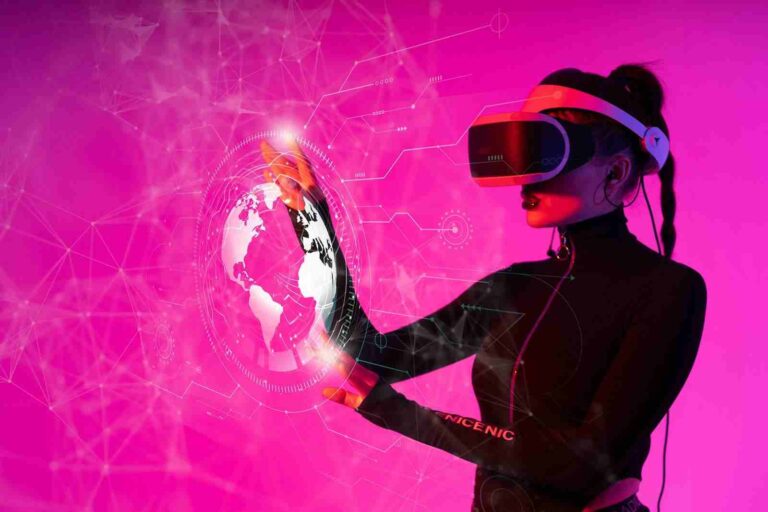
- Immersive Learning: Picture PCF controls that bring virtual reality (VR) or augmented reality (AR) into the Power App. Students could put on a headset and explore ancient Rome, or see a giant dinosaur stomp across their classroom floor through their tablet. These experiences would make learning truly unforgettable.
- Blended Learning Environments: The future likely involves a beautiful mix of digital and physical. PCF controls will help create seamless transitions, where students might learn a concept in an app, then apply it in a hands-on activity, with the digital tool guiding their way.
In this exciting future, PCF controls stand as key enablers. They are the building blocks that will allow us to create richer, more personalized, and profoundly engaging learning experiences. They empower teachers to be more creative, to teach more effectively, and to inspire a generation of students who are not just learning facts, but actively shaping their understanding of the world.
A New Chapter in Learning
The journey of education is endless. It is a continuous search for better ways to share knowledge, spark curiosity, and help young minds grow. PCF controls in Power Apps are a significant step in this journey. They are not just technical pieces of code; they are keys that unlock new levels of interaction and engagement in the digital classroom.
By allowing teachers to quickly add dynamic, interactive tools to their Power Apps, these controls transform simple digital lessons into vibrant, active learning adventures. They help turn passive viewers into active participants, making learning more fun, more memorable, and more effective. It is a powerful blend of technology and human ingenuity, all working together to light up the path of discovery for every student. The hum of a well-designed app, the satisfying click of a correct answer, and the quiet burst of understanding in a student’s mind – these are the real measures of success.