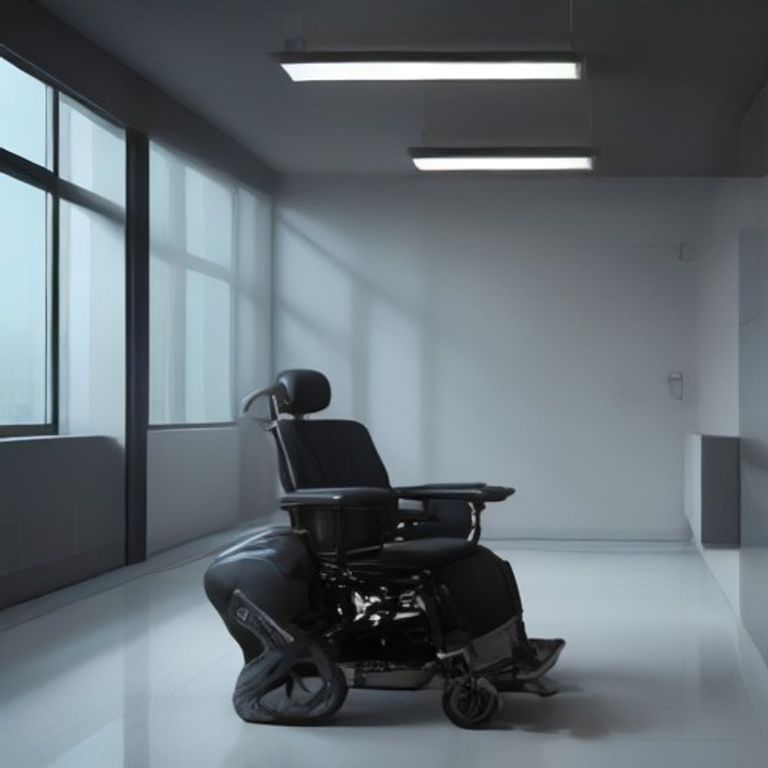
An unoccupied, sleek, modern powered wheelchair positioned in a bright, contemporary room with large windows overlooking a serene outdoor garden path, symbolizing independence and advanced accessibility.
Freedom may begin with a thought nobody else can hear. Neuralink is testing that idea today. Its brain implant can help some participants control powered wheelchairs mentally. That small step could change how we understand personal independence.
The technology starts inside the brain. More than 1,000 electrodes sit across over 100 tiny threads. Each thread is thinner than a human hair and placed carefully. A surgical robot puts these threads into the motor cortex. The electrodes then record signals from neurons as they fire.
Those signals carry information about intended movement. Think about wanting to move your hand across a table. Your brain begins preparing that movement before your muscles actually respond. Neuralink’s system tries to read those signals from inside. It then turns them into useful commands for machines.
The next step happens through machine learning. A computer learns patterns inside the recorded brain activity. Those patterns can represent directions such as up, down, left, and right. The system maps those signals onto a computer cursor. The participant can then move that cursor using thoughts alone.
That sounds almost like science fiction. Yet the real breakthrough may be somewhere else entirely. A cursor is useful, but movement can become much more valuable. The same control can connect with a powered wheelchair. Suddenly, a thought can become physical movement again.
From Moving A Cursor To Moving Yourself
The change is easy to underestimate. A person can use thoughts to control cursor movement. Those controls can help guide a powered wheelchair forward or backward. They can also help the person steer the chair. Even seating positions can be adjusted through these commands.
That matters because independence is more than simple movement. Being able to move yourself changes ordinary moments profoundly. It can mean reaching a doorway without asking someone first. It can mean turning toward another person during conversation. It can mean choosing where you want to go.
These small choices carry enormous emotional weight. Human freedom often hides inside ordinary decisions. We notice them only when those choices suddenly disappear. Technology that restores those choices therefore has unusual importance. The machine becomes valuable because it gives control back.
For someone living with paralysis, independence can become complicated. Simple tasks may require planning, assistance, and patience. A powered wheelchair already provides valuable physical support. Brain control could potentially make that support feel more personal. Instead of operating the chair through muscles, the person uses intention.
The Hidden Future Behind The Wheelchair
The wheelchair may only be the beginning. The deeper story involves communication between brains and machines. Today, the system translates neural activity into simple movement commands. Tomorrow, similar systems could support many other physical tools. The important idea is the translation itself.
Imagine a person thinking about reaching a nearby shelf. Their brain creates movement signals automatically. A decoding system recognizes those signals and sends commands outward. The machine then performs the intended action. The boundary between thought and technology becomes slightly thinner.
This could create a new kind of accessibility. Accessibility has often meant changing buildings, tools, or software. Brain interfaces add another possibility by changing the control layer itself. Instead of asking every body to operate machines similarly, machines adapt differently. That shift could influence future assistive technology design.
There is also an important lesson about machine learning. The system does not simply read a thought like text. It learns patterns connected with intended movements. That difference matters when people imagine brain technology. The brain is not producing simple digital instructions. Instead, computers are learning useful patterns from complex signals.
A New Relationship Between Humans And Machines
This technology could eventually change how machines feel. Today, most devices require buttons, switches, screens, or spoken commands. Those tools create a small gap between intention and action. Brain interfaces attempt to reduce that gap. The machine begins responding closer to the source of intention.
That possibility raises a fascinating question. What happens when controlling machines becomes almost effortless? People might stop thinking about interfaces entirely. A wheelchair could feel less like equipment and more like an extension. The best technology often disappears when it becomes truly natural.
History offers an interesting comparison here. Tools have always extended what human bodies can accomplish. A hammer extends the hand, while a vehicle extends movement. Computers extended memory, calculation, and communication. Brain interfaces could eventually extend physical control itself.
The difference is especially important. Earlier tools usually responded to deliberate physical actions. This technology aims to respond to neural signals instead. That could make machines accessible to people whose bodies cannot provide those actions. The result would be a powerful new form of human-machine partnership.
What Could Happen Over The Next Decade?
The near future will probably remain practical rather than magical. Neural interfaces may first focus on reliable movement and communication. Researchers will need systems that work consistently during everyday activities. Small improvements could matter more than dramatic demonstrations. Reliability is rarely glamorous, but patients need reliability every day.
Over several years, these systems could become more capable. Better decoding could allow smoother control of different devices. Wheelchairs might respond more naturally to changing movement intentions. Other assistive machines could eventually use similar control methods. The result could be a broader ecosystem of brain-controlled tools.
Within a decade, the biggest change might involve expectations. People could begin seeing paralysis differently. Instead of asking only what the body can move, society may ask something broader. What can the person’s brain communicate with technology? That question could reshape rehabilitation, design, and disability support.
The Unexpected Business Opportunity
A new market could grow around these systems.
The opportunity may extend beyond wheelchairs. Brain-controlled robotic arms could become another important area. Smart home systems could also respond to simple intended actions. Specialized computers might help people communicate without ordinary physical controls. Each new device could create another market for neural control software.
The largest opportunity may eventually involve the control layer itself. One neural interface could potentially connect with many different machines. That would make the interface more valuable than any single device. Companies controlling that connection could become important technology platforms. In a mature market, that platform could become extraordinarily valuable.
The Quiet Winners And Losers
Some winners would be obvious. People with severe paralysis could gain greater independence. Families might also experience less pressure during everyday activities. Care teams could spend more time supporting health and less time managing basic movement. Assistive technology companies could gain entirely new customers.
Other winners might surprise us. Designers could specialize in brain-friendly interfaces and accessible spaces. Software engineers could build models for personalized neural control. Therapists might help people train new machine-control habits. Even wheelchair manufacturers could become neural technology companies.
Some industries could face pressure too. Traditional control systems may become less important over time. Devices designed around hand movement could require major redesigns. Companies that ignore neural interfaces might eventually lose accessibility markets. The disruption would probably arrive slowly, making it easy to underestimate.
The Human Risks Cannot Be Ignored
Every powerful interface creates new questions. Brain-controlled devices could introduce concerns about privacy and personal control. Neural signals are deeply connected with individual human activity. People will naturally want strong protection around that information. Trust could become as important as technical performance.
There are also questions about unequal access. Advanced medical technology can remain expensive for years. If only wealthy patients receive these systems, benefits could spread unevenly. That would create another gap between people with different resources. Innovation becomes more meaningful when access eventually expands beyond early users.
Safety will matter just as much. A wheelchair responds to commands in the physical world. A mistaken signal could therefore have practical consequences. Systems will need careful testing before people depend upon them daily. The exciting future will still require boring safety checks.
Three Possible Futures
The most likely future is gradual improvement. Neural interfaces become better at controlling mobility and communication. More patients gain access as systems become safer and easier. The technology slowly becomes another part of medical care. Progress would look less dramatic than science fiction, but perhaps more useful.
The optimistic future could move much faster. Neural control might connect with many assistive machines. People with paralysis could gain new ways to work and live independently. Accessibility could become built around neural control from the beginning. Society might then design technology around human differences more naturally.
The unexpected future could be even stranger. Brain-controlled systems might influence mainstream devices eventually. People without paralysis could seek similar interfaces for convenience. That would change the technology from medical treatment into consumer technology. At that point, entirely different debates would begin.
Three Unlikely Possibilities
One possibility is a neural mobility platform becoming widely adopted. Instead of selling one chair, companies could sell complete control ecosystems. Another possibility involves shared standards between competing brain-interface systems. That could allow one neural interface to operate many machines. Competition might then shift from hardware toward software and services.
A third possibility concerns architecture itself. Buildings could eventually expect more direct machine control. Doors, elevators, beds, and transport systems might respond automatically. Accessibility would then become partly invisible inside everyday infrastructure. The most successful design might be the design people barely notice.
Imagine Waking Up In 2040
Imagine waking up twenty years from now. You think about moving toward the window, and your chair responds smoothly. There is no joystick waiting beside your hand. Your intention becomes the first step in movement. The machine simply follows the signal it has learned.
Later, you enter a room filled with ordinary devices. You control a computer without moving your hands. You adjust your chair position while speaking with someone. Nothing feels especially futuristic because people have grown used to it. Technology becomes remarkable only when something stops working.
That future may sound distant today. Yet every major technology begins with awkward early experiments. Early computers filled rooms, while modern phones fit inside pockets. Early internet connections felt painfully slow by today’s standards. Neural interfaces are now entering their own early chapter.
The Bigger Meaning
Neuralink’s wheelchair work is therefore bigger than one chair. It shows a possible bridge between intention and physical action. For people with paralysis, that bridge could restore meaningful independence. For technology itself, it could open a new way of interaction.
The deepest change may not involve faster machines. It may involve giving people control over their own choices again. Independence is difficult to measure with charts and numbers. Sometimes it looks like choosing where to turn. Sometimes it means moving forward without asking anyone.
That is why this technology deserves careful attention. The future will not be shaped only by faster processors. It will also be shaped by new ways humans regain agency. Neural interfaces could become one such path. The important question is not whether machines can read signals, but what freedom follows.
Perhaps the most powerful technology is not the machine itself. Perhaps it is the moment when someone controls their world again. If thoughts can someday move wheelchairs, what else might they move? And when intention becomes a new kind of interface, where does human ability end?



