# The AI Tool Avalanche: How to Stop Chasing Shiny New Buttons
I recently spent forty-five minutes trying to figure out how to use a "revolutionary" AI tool that promised to organize my entire digital life. By the time I finally understood the interface, I realized I could have finished the actual work I was supposed to be doing in about ten minutes.
It felt like I had just bought a massive, complicated kitchen gadget that requires a twelve-page manual just to toast a piece of bread.
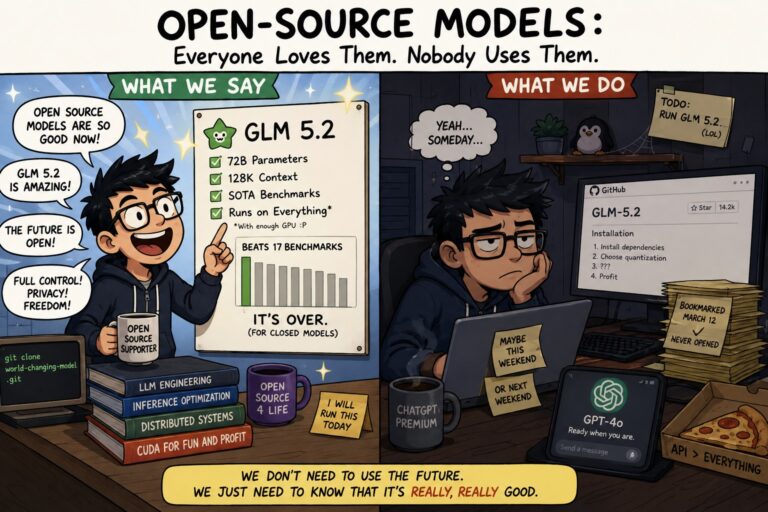
Every single morning, the notifications roll in. There is a new AI for writing emails. There is a new AI for making logos. There is an AI that can summarize meetings, and another one that can pretend to be your personal assistant. It feels like a race where the finish line keeps moving further away.
If you feel exhausted by it all, you aren't alone. It's called AI fatigue. And honestly? It might be the most sensible way to feel right now.
The Distraction Trap
We often mistake "new" for "better. "
When a new tool launches, it comes with a lot of noise. The marketing makes it sound like a magical solution to every problem you've ever had. But in a real office or a real workflow, things are rarely that simple.
There is a difference between a tool that solves a problem and a tool that just gives you a new problem to manage.
Think about it this way. If you have a pile of laundry to fold, and someone gives you a robot that requires you to charge it, update its software, and teach it how to recognize different fabrics, did you actually save any time? Or did you just trade one chore for a more expensive, more complicated chore?
Real productivity isn't about how many tools you have. It's about how much work actually gets finished. Sometimes, the best way to move faster is to stop clicking on everything that promises to make you "superhuman. "
The Cost of Switching
There is a hidden price for every new piece of software we invite into our lives.
It isn't just the monthly subscription fee. There is also the "mental tax. " Every time you switch from one app to another, your brain has to adjust. You have to learn where the buttons are. You have to remember the specific way this tool
If you spend your whole day jumping between five different AI tools, you aren't working. You are just managing software.
It's like trying to build a house, but instead of using a hammer and nails, you spend all day deciding which specific type of high-tech, smart-hammer you want to use today. The house doesn't get built. The hammers just sit in boxes.
How to Filter the Noise
So, how do you decide what is actually worth your time? You need a filter.
You shouldn't look at what a tool can do. You should look at what it actually does for your specific, boring, everyday tasks.
Here is a simple way to look at it:
Does it solve a recurring pain point? If you spend three hours every week doing the exact same manual task, a tool that automates that specific thing might be worth it. Is the learning curve worth the reward? If a tool takes a week to learn but only saves you five minutes a month, walk away. * Does it play well with others? A tool that lives in a lonely corner and doesn't connect to your email, your calendar, or your files is just an island. Islands are hard to work on.
Sometimes, the most "advanced" way to do something is still the old way. If a simple spreadsheet works, a complex AI dashboard is just a distraction in a fancy suit.
Finding the Middle Ground
We don't have to ignore technology entirely. That would be silly. AI is genuinely useful when it's used as a quiet assistant rather than a loud centerpiece.
The best tools are often the ones you forget are even there. They work in the background. They handle the repetitive parts of your job so you can focus on the parts that actually require a human brain.
The goal shouldn't be to have the most tools. The goal should be to have the least amount of friction between your idea and the finished product.
Deep work requires focus. And focus is the one thing that a thousand different AI tools can't give you. They can give you speed, sure. But they can't give you the quiet, steady clarity needed to do something meaningful.
Maybe the trick isn't to learn every new tool. Maybe the trick is to learn when to say, "No thanks, I've got this. "