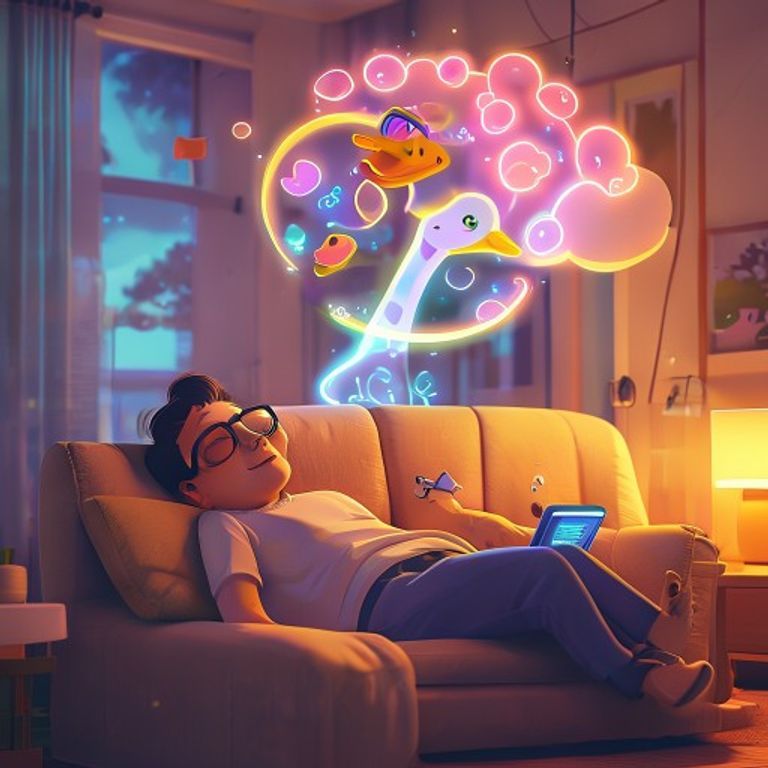
The Middle-of-the-Night Panic
A client sends an angry email at 11: 30 PM on a Tuesday. Your heart starts racing. Your stomach feels like it just swallowed a cold stone. Suddenly, you are typing a response that is far too defensive, far too sharp, and way too long.
You hit send. You go to bed. You wake up the next morning feeling that heavy, sinking sensation in your chest because you know you just turned a small misunderstanding into a massive, expensive fight.
This happens in offices and living rooms every single day. It is not a lack of intelligence that ruins businesses. It is not a lack of technical skill or fancy software. It is the inability to stay calm when things go sideways.
In the professional world, we have a fancy name for this: emotional regulation. But between us, it is just the ability to not lose your cool when the world feels like it is falling apart.
The Cost of Losing Control
When a leader reacts purely on instinct, they are playing a dangerous game. Instinct is great for running away from a lion, but it is terrible for managing a team or negotiating a contract.
If a manager screams during a meeting because a deadline was missed, two things happen. First, the mistake doesn't actually get fixed. Second, the team stops telling that manager the truth. They start hiding things. They start polishing their mistakes instead of solving them.
Silence is expensive. A team that is afraid to speak up because the boss is "unpredictable" is a team that is quietly failing.
Business is often a series of calm decisions made amidst a storm of chaos. If you cannot regulate your emotions, you are essentially letting a stranger drive your company. That stranger is your impulse, and they usually have no idea where they are going.
The Difference Between Feeling and Reacting
There is a common mistake people make. They think emotional regulation means being a robot. They think it means having no feelings at all.
That is not true. In fact, trying to be a robot is impossible and, frankly, quite exhausting.
There is a massive difference between feeling an emotion and acting on it.
- You can feel angry.
- You can feel panicked.
- You can feel insulted.
Those feelings are just data. They are your brain telling you that something is wrong. The skill is in the gap between the feeling and the action.
Think of it like a pause button. When a crisis hits, most people skip the pause and go straight to the play button. The
It is about moving from "I am being attacked" to "This person is unhappy with the current project status. " One requires a fight. The other requires a solution.
The Competitive Advantage
We live in a world that is constantly trying to grab our attention and trigger our emotions. News, social media, and even difficult clients are all designed to pull us out of our calm centers.
Because everyone is constantly reacting, being the person who doesn't react becomes a superpower.
When a market crashes, the person who can sit still and look at the numbers usually wins. When a team member makes a huge error, the leader who stays composed earns a level of respect that money cannot buy.
Stability is a magnet. People want to work for, buy from, and partner with people who are steady. If you are a rollercoaster of moods, people will eventually step off the ride.
It is much easier to build a business on a foundation of steady decisions than on a mountain of emotional outbursts.
How to Build the Muscle
The good news is that this isn't something you are born with. It is a muscle. And like any muscle, it gets stronger with practice.
One way to start is by noticing the physical signs. Most people don't realize they are angry until they are already shouting. But your body knows earlier. Your breathing gets shallow. Your shoulders tighten. Your face gets warm.
If you can catch the physical signal, you can catch the emotion.
Another way is to implement "The Overnight Rule. " If an email or a message makes your blood boil, you are not allowed to reply for at least one hour. If it is 11: 00 PM, you wait until 9: 00 AM. Most "emergencies" look a lot less scary in the morning light.
It feels like you are losing time in the moment, but you are actually saving yourself from the massive amount of time you would spend cleaning up the mess of a bad reaction.
The Quiet Reality
At the end of the day, business is just people. And people are messy, unpredictable, and often irrational.
You cannot control the market. You cannot control your clients. You cannot control your employees. The only thing you truly own is your own response.
Mastering that response is the quietest, most effective way to win. It doesn't look like a grand speech or a brilliant strategy. It looks like a person sitting quietly in a chair, taking a breath, and choosing the right path instead of the loudest one.