# When Tweaking Your Tools Becomes a Full-Time Job
It happened on a Tuesday afternoon. A small business owner sat staring at a spreadsheet, moving a single button two pixels to the left. They weren't trying to make it look pretty. They were trying to make it "perfect. " They spent three hours on that button. Three hours. In that time, they could have answered ten customer emails or finally fixed that broken link on the website.
But the button felt wrong. And if the button was wrong, the whole system was wrong.
This is a trap. It is a quiet, comfortable, and very dangerous trap called "optimization obsession. " It is when we decide that the way we work is more important than the work itself.
The Perfectionist's False Sense of Progress
There is something deeply satisfying about organizing a digital workspace.
Setting up a new task manager feels like winning. Choosing the perfect font for a report feels like being productive. Moving files into neat, color-coded folders gives you a tiny hit of dopamine. It feels like you are building an empire.
But here is the reality check: moving folders is not the same as making sales. Organizing your inbox is not the same as solving a client's problem.
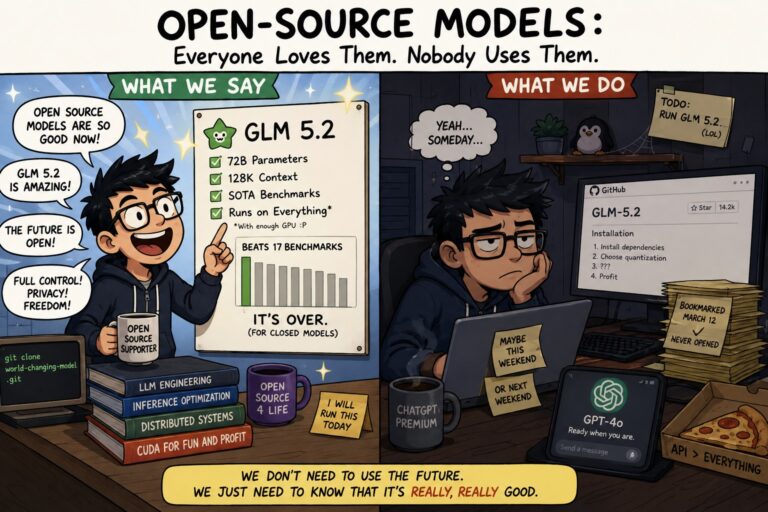
We often use "optimization" as a sophisticated form of procrastination. It is much easier to spend an entire afternoon researching the "best" project management software than it is to pick up the phone and make a difficult sales call. One feels safe. The other feels risky.
If you spend all your time sharpening the axe, you never actually swing it at the tree. The axe becomes the most beautiful, perfectly balanced, high-tech axe in the world. But the forest stays exactly as it was.
The Cost of "Just One More Tweak"
In a business, everything has a price. Usually, we think of price in terms of money. But the most expensive cost is often time.
When a professional spends ten hours trying to automate a process that only takes twenty minutes once a week, they have made a bad trade. They have traded life energy for a theoretical efficiency that might never actually pay
Think about it this way:
- Optimization is about making a good process better.
- Obsession is about making a mediocre process look perfect.
If a customer is waiting for an answer, they do not care if your internal workflow is a masterpiece of efficiency. They do not care if your CRM is perfectly integrated with your calendar. They only care that you solved their problem.
Over-optimizing creates a wall between you and the real world. You stop interacting with people and start interacting with your own systems. You become a technician of your own life, rather than a participant in it.
How to Tell if You Are Drifting
It is hard to notice when you are doing this because it feels like work. It doesn't feel like laziness. It feels like being "diligent. "
You might want to ask yourself a few uncomfortable questions:
Am I doing this because it actually adds value to the person paying me? Am I avoiding a difficult task by focusing on a technical one? If I finished this "improvement" right now, would my customers actually notice a difference?
If the answer to these is "no, " you aren't optimizing. You are hiding.
There is a certain beauty in a messy, functional system. Sometimes, the best way to run a business is to have a slightly disorganized folder that actually contains completed work, rather than a perfect folder that is completely empty.
Finding the Sweet Spot
The goal isn't to stop improving. That would be silly. We should always try to work smarter, not harder. But there is a limit.
True efficiency is about finding the minimum amount of setup required to get the maximum amount of real-world results. It is about knowing when "good enough" is actually the most professional choice you can make.
A professional knows that tools are meant to serve the mission, not become the mission. A hammer is a great tool for building a house, but spending all day polishing the hammer won't put a roof over anyone's head.
Maybe the most important optimization isn't about your software or your spreadsheets. Maybe it's about optimizing your focus.
Focus on the things that move the needle. Focus on the people. Let the tools be tools.
The world doesn't need more perfect systems. It needs more people who actually get things done.