Can Debugging Web Resources accidentally introduce new problems while fixing existing ones?
The Butterfly Effect of Code: How Fixing One Web Glitch Can Stir a Storm
Imagine you have a puzzle. A big, tricky puzzle with thousands of pieces. Each piece fits just right with others around it. Now, imagine one piece is slightly wrong. It’s a tiny bit bent, making a small gap in the picture. You decide to fix it. You carefully bend it back, or maybe you replace it with a new, perfect piece.
But what happens next?
Sometimes, when you push that one piece into place, another piece, far away, pops out. Or a whole section of the puzzle suddenly looks different. You fixed one small problem, but you made a new, unexpected one appear.
This isn’t just a puzzle problem. It’s what can happen when people work on websites and the tools that make them run. It’s called “debugging” – finding and fixing mistakes in computer code. And it’s a big deal. Fixing one mistake can, by accident, cause new ones to pop up. Like a ripple in a pond, one small change can spread out and touch everything.
The Invisible Threads of the Web
Think of the internet as a giant, invisible spiderweb. Each website, each app, each little button you click on, is a tiny part of that web. These parts are all connected by lines of computer code. Code is like a language computers understand. It tells them what to do. When a computer program has a “bug,” it means there’s a mistake in its code. It’s like a tangled thread in that web, stopping things from working right.
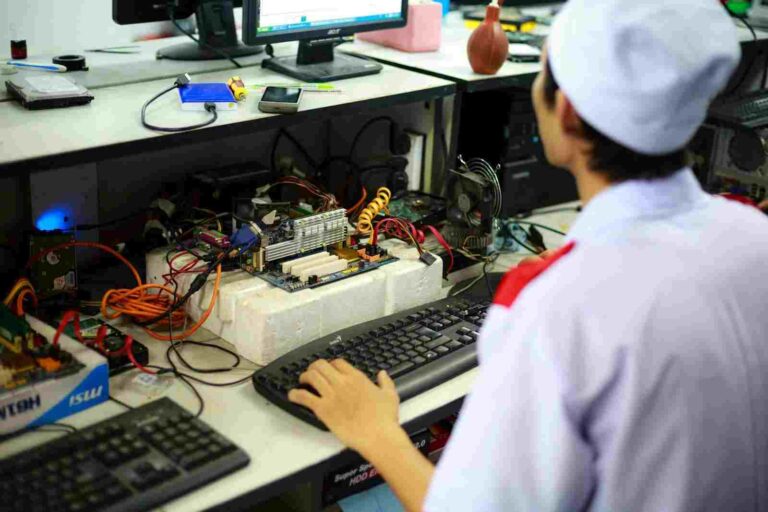
When a website acts strange, or a button doesn’t work, someone has to go in and find that tangled thread. They are like a detective, looking for clues. This hunt is called debugging. It takes patience. It takes sharp eyes. And it takes a lot of careful thought.
People who fix these problems, called developers, try their best. They know the web is a delicate thing. But even the best of them can find surprises. It’s like trying to fix a small leak in an old house. You patch the tiny hole, and suddenly, a pipe bursts in the basement! The web is full of these hidden connections, these unexpected jumps.
Why Does Fixing Break Things? The Chain Reaction
It sounds strange, doesn’t it? That making something better could make it worse. But there are many reasons this can happen.
First, computer code is often like a very tall stack of building blocks. Each block sits on top of another. If you pull out a block from the middle, even if it’s a “bad” block, the blocks above it might wobble. They might even crash down. When you change one part of the code, it might affect other parts that rely on it. It’s like pulling on a single string in a sweater; the whole thing can start to unravel.
Second, websites are not built by just one person. Many people, sometimes hundreds, work on them over time. Different teams might add new features. Old pieces of code might be used in new ways. It’s like a very old city where new buildings are put up next to ancient ones. The old pipes and wires might not be ready for the new demands. So, when a developer tries to fix something in an old part of the code, they might not know how it connects to a new part. The true web of connections is often much bigger than anyone can see at first glance.
Third, sometimes the “fix” itself isn’t perfect. Maybe it solves the problem for one group of people using the website, but it creates a new problem for another group. Or maybe it works on one type of computer but not on another. It’s like a doctor giving medicine that cures one sickness but causes a side effect. The intention is good, but the outcome is mixed.
A Little Story: The Case of the Missing Pictures
Once, there was a popular website where people shared their art. It was bright and colorful, full of amazing pictures. But one day, some users noticed a problem. When they clicked on a picture to see it bigger, the picture would vanish! It was like a magic trick, but not a fun one.
The web team got to work. A young developer named Lily was assigned the task. She looked at the code for displaying pictures. She found a tiny mistake, a misplaced comma, that was causing the pictures to disappear. “Aha!” she thought. She fixed the comma, smiled, and sent the fix out.
The next day, the website felt different. The pictures appeared perfectly when clicked. But now, people couldn’t add new pictures anymore! The “upload” button, which had always worked, was now just a gray, lifeless square. It was a surprise. Lily’s fix had solved one problem but created another. The code for showing old pictures was linked to the code for adding new ones in a way no one expected. Her small change had sent ripples through the whole system. The “fix” had become a new bug.
This kind of story happens all the time in the world of computers. It shows that even small changes can have big, unexpected results. It teaches a lesson about how complicated things can become when they grow very large and have many parts working together.
The Wisdom of the Ages and the New Digital Path
For a long time, people have known that trying to make things perfect can be hard. Think about building a bridge. You might fix a weak spot on one side, but if you don’t check how that change affects the other side, the whole bridge could be in trouble. Our grandparents often told us to “look before you leap.” This old wisdom still holds true in the digital age.
In the past, when things were built by hand, like a clock or a house, you could see almost every part. You could feel the
So, how do smart people try to stop these “accidental bugs” from happening?
- Testing, Testing, One, Two, Three: Before a fix goes live for everyone to see, developers run many tests. They try to break the website in every way possible. They pretend to be different users, clicking every button, typing every word. It’s like kicking the tires on a car after a repair, making sure it won’t fall apart on the road. This helps catch new problems before they cause trouble.
- Small Changes are Better: Instead of trying to fix everything at once, developers try to make tiny changes, one at a time. This way, if something breaks, it’s easier to figure out what caused it. It’s like adding one spice at a time when you’re cooking, instead of dumping them all in at once.
- Code Reviews: Other developers look at the code before it’s changed. It’s like having another pair of eyes check your homework. They might see a hidden connection or a potential problem that the first developer missed. It’s a way of sharing knowledge and spotting errors before they happen.
- Version Control: Imagine having a giant undo button for everything. That’s kind of what version control is. Every time a change is made to the code, a copy is saved. If a new problem pops up, they can quickly go back to an earlier version where everything worked. It’s like having a time machine for your computer code.
These practices are not just technical rules; they are ways of thinking. They show a deep respect for the complexity of the systems we build. They remind us that even the simplest fix can be a grand experiment with unexpected results.
The Philosophy of Imperfection
This idea, that fixing one thing can break another, makes us think about bigger questions. Can anything truly be perfect? Or is there always a trade-off? When we aim for perfection in our digital world, we often find ourselves chasing a moving target. We fix one problem, and a new one appears. It’s like trying to smooth out every wrinkle in a piece of fabric—as you smooth one part, a new wrinkle might appear somewhere else.
This cycle is not a sign of failure. It’s simply the nature of building complex things. Every website, every program, is like a living thing, always changing, always growing. And just like living things, they will always need care, and sometimes, they will get “sick” with a bug.
The constant need to fix and refix, to debug and re-debug, teaches us humility. It teaches us that our creations, no matter how clever, are never entirely under our control. They have a life of their own, connected in ways we don’t always fully understand.
From a human feeling point of view, finding an unexpected bug after a fix can be frustrating. A developer might feel a jolt of disappointment, a sigh escaping their lips. But it’s also a challenge, a new puzzle to solve. It keeps minds sharp and pushes people to think deeper about how things connect. It’s about being like a gardener, constantly tending to a complex ecosystem, not just building a static machine. The hum of the server, the soft glow of the screen, they are constant reminders of the living, breathing nature of the web.
Looking Ahead: Smarter Tools, Deeper Understanding
In the future, will it get easier to avoid these “accidental bugs”? Probably. Scientists are working on smarter computer programs that can help developers. These new tools might be able to predict where a fix could cause a new problem. They might highlight those hidden connections before a developer even makes a change.
Imagine a little digital helper that says, “Hey! If you change that line of code, it might mess up the login page for users in other countries!” That would be a huge step forward. These “AI helpers” could learn from all the past mistakes and fixes, making developers’ jobs a bit less like guesswork and more like a guided tour.
But even with very smart tools, the human part will always be important. The deep thinking, the creativity, the ability to see the bigger picture—these are things that only people can truly do. The future of debugging won’t just be about smarter machines, but about smarter ways for people and machines to work together.
We must remember that every line of code, every feature on a website, is ultimately made for people. It’s meant to connect us, inform us, and make our lives easier. So, when we fix things, we’re not just fixing code; we’re fixing experiences. We’re smoothing out the digital paths for millions. And even when we accidentally make a new bump in the road, the journey to make things right is what truly counts.
The gentle click of a developer’s keyboard, the soft whir of servers, the glowing screen—these are the quiet sounds of constant creation and careful repair. It’s a never-ending dance between what is broken and what is whole, a testament to the ongoing work of making the digital world a better place, one careful step at a time.
Key Takeaways
- The Web is a Complex System: Websites and apps are like giant, connected puzzles. Changing one small part can affect many others in unexpected ways.
- Debugging Can Introduce New Problems: Fixing a mistake in computer code can accidentally create new ones because of hidden connections in the system. This is a common challenge in building anything complex.
- Prevention is Key: Developers use strategies like extensive testing, making small changes, having others review their work, and using “undo” systems to catch new problems early.
- It’s a Human Challenge: The process teaches us about imperfection, patience, and the continuous need for learning and adaptation in a fast-changing digital world.
- Future Tools Will Help: New computer programs, like AI, will likely make debugging smarter by predicting problems, but human skill and wisdom will always be essential.