Can Legacy System Modernization help automate the verification of data accuracy after migration?
The Great Data Leap: How New Systems Make Sure Our Information Stays Spotless
Picture a grand old library. Its shelves sag under the weight of ancient books. Every page holds a secret, a piece of vital history. Now, imagine moving every single book, every dusty scroll, into a sparkling new digital library. A huge task, isn’t it? What if a book gets lost? What if a page tears? What if a secret gets forgotten?
This massive move, from the old to the new, is much like what happens with computer systems. Many businesses, schools, and hospitals use “legacy systems.” These are like those old, trusty libraries, built many years ago. They hold all the important information: customer names, student grades, patient health records. Over time, these systems get old. They become slow. They can’t do new tricks. So, big changes are needed. This is called “modernization.” It means making the old new again.
But here’s the big worry: when you move all that important information—called “data”—from the old system to the new one, how do you know it all arrived safely? How do you know every single bit is correct? Is every book accounted for? Is every word exactly as it should be? This is where the real challenge lies: making sure all that moved data is perfect. And the biggest question of all: Can clever new technology help us check this automatically? Can machines take on this giant detective job?
The Old Ways: A Sea of Pages to Check
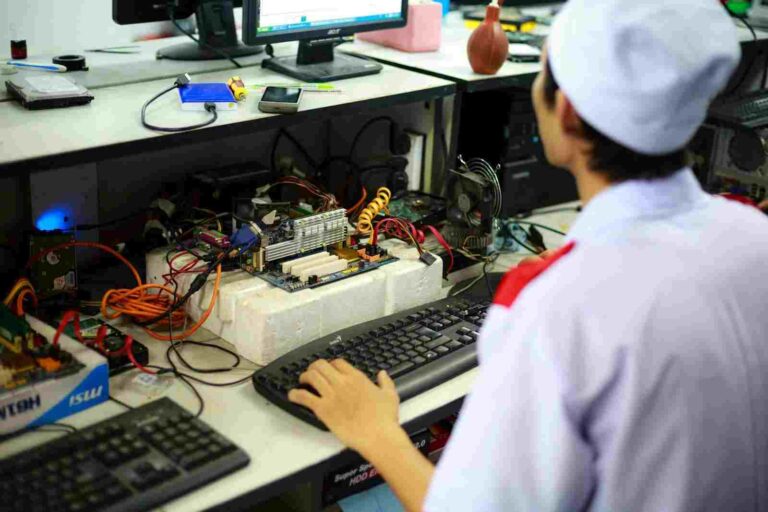
Not so long ago, checking moved data was a mighty chore. Imagine dozens of people, hunched over computer screens, eyes blurring. They would compare endless lists. They would look at numbers, one by one. Was this number the same as that number? Did this name match exactly? It was like trying to find a single, tiny typo in a thousand encyclopedias.
This way of working was slow. It was tiring. And, let’s be honest, humans make mistakes. Even the most careful person can miss something. A tiny error, a forgotten digit, or a switched letter could cause big problems later. Think about it: a wrong address for a customer. A forgotten grade for a student. A mixed-up medicine for a patient. Small errors could lead to big headaches, big worries, even big dangers.
These old ways of checking data, often called “manual verification,” were like building a tall tower by hand, one brick at a time, and then having to check every single brick yourself for cracks or chips. It demanded immense patience. It demanded an army of people. And still, a whisper of doubt might remain. Could something have been missed? The very idea of perfect, spotless data felt like a dream, always just out of reach.
Why Make the Big Leap? The Power of the New
So, why bother with such a huge move? Why change those grand old libraries into shiny new ones? Old systems are like old cars. They break down often. They are slow. They guzzle fuel. And they simply can’t handle the roads of today. Modern systems, on the other hand, are like sleek, fast, and fuel-efficient vehicles. They can do amazing things.
Modern systems can handle much more information, much faster. They are safer from bad guys who try to steal data. They can connect with other new systems, sharing information like never before. This opens up a world of new possibilities. Imagine a doctor’s office where patient records instantly appear on a tablet, no matter which part of the hospital the patient visits. Or a school where grades, attendance, and special notes about a student are all in one easy-to-find place for teachers. This is the promise of modernization. It’s about building a better future, one where information flows freely, safely, and quickly.
It’s not just about speed. It’s about new doors opening. Old systems often feel like a single, quiet room. Modern systems are like a whole house, connected to others, with windows looking out onto a vibrant world. They allow for new ways of working, new services, and new ideas that were simply impossible before. They are built for tomorrow, not just for today.
The Magic of Automation: Smart Helpers at Work
This is where the magic really begins. What if we had super-smart helpers? Robots that could check every single piece of information, faster than any human, and never get tired? That’s automation. It means making machines do the heavy lifting of checking data. Instead of eyes blurring from endless comparisons, machines can do it in a blink.
How do they do it? It’s not magic, but very clever engineering.
-
Secret Handshakes (Checksums): Imagine you have a big box of colorful blocks. Before you move them, you count them and write down a special number, like a secret code, for that exact group. When the blocks arrive at the new place, you count them again and get another special number. If the two numbers match, you know all the blocks made it! This secret code is called a “checksum.” Computers do this with data. They create a special code for a batch of information. After the data moves, they create another code. If the codes are the same, the data moved perfectly. If they are different, something went wrong, and the computer flags it. This is super fast and very reliable for knowing if something changed.
-
Perfect Matches (Reconciliation): Think of having two different lists of all your favorite toys. One list is from your old room, and one is from your new room. “Reconciliation” is like having a robot carefully compare every single toy on both lists. Is every toy on list A also on list B? Does it have the same color, the same size, the same details? If there’s a toy on one list that’s not on the other, or if a toy’s details don’t match, the robot points it out. This is how computers check huge amounts of data. They compare the data in the old system with the data in the new system, field by field, making sure every detail aligns perfectly.
-
Smart Detectives (Artificial Intelligence): This is the newest and most exciting part. Imagine a super-smart detective who doesn’t just check if things match, but also learns what “normal” data looks like. If something looks odd, even if it matches number for number, the detective might say, “Hmm, this looks strange. Usually, this customer spends more money, or this student has higher grades.” This smart detective is Artificial Intelligence, or AI. AI can look for patterns in the data. If a piece of data doesn’t fit the usual pattern, the AI can flag it as a possible error, even if a simple checksum or reconciliation might have missed it. It’s like a computer that gets a “gut feeling” something is off, based on everything it has learned.
These automated tools work tirelessly. They don’t get bored. They don’t get tired. They can process billions of pieces of information in minutes, tasks that would take humans years. This means businesses can be much surer that their data is clean and correct after a big move. It gives a deep sense of confidence, knowing the information is sound.
The Human Touch: The Smart Minds Behind the Machines
Does this mean humans are out of a job? Not at all. Automation is a helper, not a replacement. Think of a master chef in a busy kitchen. The chef uses
Humans still set the rules for the automated tools. They design what the machines should check for. They fix the tough problems that the machines can’t figure out on their own. And most importantly, humans understand the meaning of the data. A machine can tell you a number is wrong, but a human understands what that wrong number means for a person, a business, or a community.
For example, a machine might flag a customer’s address as “different.” A human would then look at it and realize it’s just a common typo, or maybe the customer truly moved. The human can make a smart decision. The human brings judgment, wisdom, and a deep understanding of why the data matters. It’s like a conductor leading an orchestra. The instruments (automated tools) play beautifully, but the conductor (human expert) brings it all together, adding soul and ensuring harmony.
Trust is a funny thing. We trust the machines to do their job, but who builds the trust into the machines themselves? Humans do. We design them. We train them. We monitor them. The partnership between human intelligence and machine efficiency is what makes these modernization projects truly successful. It’s a dance between old wisdom and new ingenuity.
Real-World Stories: Data Transformed, Confidence Built
Stories from the real world show just how powerful this is.
A large shipping company, which sends packages all over the world, decided to move all its customer details, package tracking info, and billing records to a new, modern system. Billions of pieces of information. Trying to check it by hand would take literally years. The company used smart automated tools. These tools ran checks day and night. They found tiny mistakes quickly. They reconciled huge lists of packages and customers. This allowed the company to complete the move in months, not years, and with a very high level of confidence that their package tracking would remain accurate. Without automation, the project might have failed entirely due to the sheer volume of data and the risk of errors.
Another example comes from a healthcare center. They had old patient records stored in a clunky system. Moving these records was risky; a misplaced allergy note or a wrong medicine dosage could be very dangerous. They used automated verification systems that not only checked if all records moved, but also if key pieces of information within those records, like birthdates or blood types, remained consistent. The system flagged inconsistencies, allowing human experts to review and fix them before any harm could occur. This gave doctors and nurses peace of mind, knowing the digital patient files were as reliable as the paper ones they used to keep. The faint hum of new servers now brought a quiet confidence.
In finance, a bank decided to update its systems that handle customer savings and loans. When billions of transactions, deposits, and withdrawals were moved, the chance for error was huge. Automated tools compared every single transaction, down to the smallest penny. They flagged any difference, no matter how tiny. This rigorous automated checking meant the bank could promise its customers that their money was safe and accounted for, every single cent. This reinforced trust in a crucial, sensitive area.
Challenges and How We Overcome Them
It’s not always smooth sailing. Moving data and making sure it’s perfect can be tricky. Data can be messy, like a jumbled pile of old toys. Old systems can be stubborn, like a grumpy old dog that doesn’t want to learn new tricks.
- Messy Data: Sometimes, the information in the old system isn’t clean. It might have typos. It might be incomplete. It might be stored in strange ways. The new system expects clean, organized data. This means the automated tools might flag many “errors” that aren’t really migration problems but old data problems.
- Solution: Before moving, a big “spring cleaning” of the old data is often needed. This is called “data cleansing.” It’s like organizing your toy box before you move it to the new shelf.
- Different Languages: The old system might speak a different “language” than the new one. For example, dates might be written “MM/DD/YYYY” in one system and “YYYY-MM-DD” in another. Or one system might use “M” for male and “F” for female, while the new one uses “Male” and “Female.”
- Solution: Special translation rules are created. It’s like having a translator who knows how to convert words from one language to another perfectly, so the new system understands everything.
- Complexity: Some systems are very old and very complex, like a giant puzzle with millions of pieces. Understanding how all the data fits together can be hard, even for human experts.
- Solution: Careful planning is key. Like drawing a detailed map before a big adventure. Breaking down the big move into smaller, manageable steps helps a lot. Testing, testing, and more testing is also crucial. It’s about knowing your data, inside and out, before the big leap.
Despite these challenges, the tools and the wisdom gained from past projects make these big moves much easier today. The path is clearer now, the tools sharper.
A Glimpse into Tomorrow: Data’s Trusted Guardians
The future looks even smarter. We are moving towards a world where data verification isn’t just about checking what has been moved, but about predicting what might go wrong even before it happens. Imagine a super-smart system that watches the data as it moves, like a guardian angel, and instantly warns of potential issues based on its vast experience.
Machines won’t just check. They might predict problems before they happen. They could say, “Based on these patterns, we think there might be a mismatch here, even though the numbers look fine.” This is where advanced AI comes in, learning from every migration and becoming incredibly skilled at spotting the slightest imperfection.
Future systems might even learn to fix small errors themselves. Like a wise old librarian who knows where every book belongs, even if it’s been misplaced, and can put it back without being told. This “self-healing” data environment is a dream, but one that is slowly becoming real. The goal is a world where data moves flawlessly, where errors are caught instantly, and where trust in information is absolute. The journey from dusty ledgers to fully automated, self-healing data guardians is truly remarkable.
The Enduring Promise of Accuracy
So, can updating old systems help automate the verification of data accuracy after migration? A resounding “yes!” It’s not just a possibility; it’s becoming the standard. The quiet hum of new servers, the lightning-fast calculations of automated tools, and the watchful eye of human experts work together.
This journey from ancient, manual checks to smart, automated guardians is about more than just technology. It’s about building trust. It’s about making sure that the vital information that runs our world is always correct, always safe, and always ready when needed. It’s about making the old stronger, and the new wiser.
The essence of a well-modernized system is not just its speed or new features, but the unwavering confidence it instills. When data moves, its truth must travel with it, unblemished and whole. Automation is the unseen thread that weaves this truth into the new fabric of our digital world. It’s a testament to human ingenuity, constantly striving for a clearer, more certain future, one perfectly accurate piece of data at a time. The quiet click of a successfully verified dataset is the sound of progress.