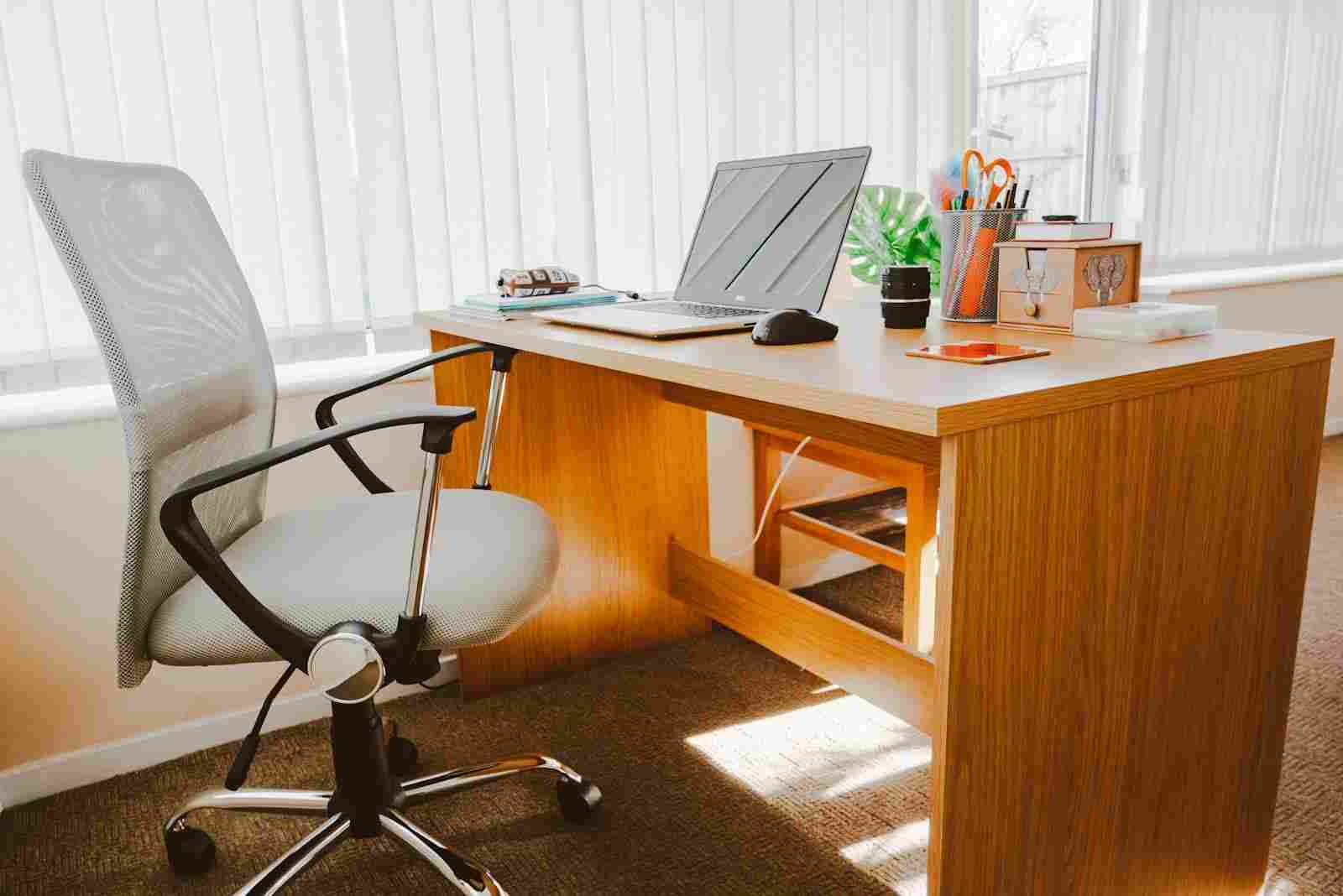
The Great Living Room Office Experiment
The laptop is open. The coffee is hot. Then, the neighbor starts using a jackhammer. Or perhaps your younger brother decides that 10: 00 AM is the perfect time to practice the drums. Suddenly, your professional "office" feels a lot more like a chaotic playground.
It happens to the best of us. We thought working from home would be a dream. We imagined quiet mornings and perfect focus. But the reality is often a loud fan whirring in the background, a pile of laundry staring at us judgmentally, and the constant struggle to look "professional" on a video call when your dog is barking at a passing squirrel.
Can you actually run a serious business without a dedicated office? The short answer is yes. But the real answer is: only if you learn how to survive the chaos.
Running a business isn't about where your desk sits. It is about how you manage your brain and your boundaries.
The Battle of the Background Noise
Noise is the silent killer of productivity. It isn't just the loud stuff, like construction or sirens. It is the small, repetitive sounds that slowly wear down your focus. The hum of a refrigerator, the ticking of a clock, or a fan that sounds like a jet engine taking off.
When your brain is trying to solve a complex problem, even a tiny sound can break your flow. Once that flow is gone, it takes a long time to get it back.
A simple way to fight this is through hardware. Noise-canceling headphones are not a luxury when you work from home; they are a survival tool. They create a small, private bubble of silence in a noisy world.
If the noise is too much, some people find that "brown noise" or "white noise" helps. It's like a blanket of sound that hides the annoying interruptions. It doesn't solve the problem, but it makes the problem easier to ignore.
The Invisible Wall: Boundaries with People
This is perhaps the hardest part of the home-office life. When you are "at work, " your family or roommates often see you as being "at home. "
To them, you are just sitting in a chair. They might think it is okay to pop in for a quick question, ask what is for dinner, or show you a funny video. They don't realize that every time they interrupt, they are effectively pulling you out of a deep mental task.
You have to build invisible walls.
Since you don't have a physical door to close, you need a signal. Maybe it is a specific lamp that is turned on when you are in "deep work" mode. Maybe it is a sign on the back of your chair.
Communicating these boundaries is vital. You have to tell the
The Mental Shift: Home vs. Work
There is a psychological cost to working where you sleep and eat. Your brain loves patterns. When you sleep in your bed, your brain thinks, "Time to rest. " When you sit at your desk, your brain thinks, "Time to work. "
If your desk is also your dining table, those lines get blurry. You might find yourself checking emails while you eat breakfast, or worrying about client deadlines while you are trying to watch a movie at night.
This blurring leads to burnout. You never feel truly "off, " and you never feel fully "on. "
To fix this, you need a ritual. It doesn't have to be fancy. It could be taking a ten-minute walk around the block before you sit down to work. This tells your brain, "The walk is over, and the workday has begun. " When the day is done, do the same thing in reverse.
A dedicated workspace-even if it is just a specific corner of a room or a small desk facing a window-helps create this mental separation. It says to your mind: this space belongs to the business.
Physical Space and the Messiness of Reality
A cluttered desk often leads to a cluttered mind. If you are surrounded by mail, old coffee mugs, and random papers, it becomes harder to focus on a single task.
However, don't fall into the trap of thinking you need a perfect, minimalist office to be successful. Life is messy. Sometimes, a pile of laundry will inevitably end up in your peripheral vision.
The goal is not perfection; it is control. Keep the immediate area around your computer clear. This gives your eyes a place to rest when you look away from the screen.
The Trade-offs
Running a business from home is a series of compromises.
You trade the professional atmosphere of an office for the comfort of your own space. You trade the social interaction of colleagues for the freedom of your own schedule. You trade a quiet environment for one that you have to actively manage.
Is it worth it? For many, the answer is yes. The cost savings are huge, and the freedom is unmatched. But you cannot treat it as a "free pass" to be disorganized.
An office isn't just a building with desks and chairs. An office is a mindset. You can build that mindset anywhere, as long as you are willing to protect your time, your focus, and your peace of mind.
In the end, a business is built on work, not on real estate. Whether you are in a skyscraper or a corner of your bedroom, the quality of your thinking is what actually moves the needle.