Japan is not deploying humanoid robots into elder care simply because it loves futuristic gadgets.
It’s doing it because something deeper is breaking.
Across the country, nursing homes are understaffed, families are shrinking, and millions of elderly people are spending long stretches of time alone. What began as a labor shortage has gradually become an emotional crisis — one that technology companies increasingly believe machines might help soften.
The headlines often focus on the spectacle: robots lifting patients, AI companions chatting with seniors, mechanical assistants leading exercise routines in care homes. But beneath the novelty is a profoundly human story.
An aging society is trying to answer a difficult question:
What happens when there simply aren’t enough humans left to care for humans?
Japan Is Becoming the World’s First “Longevity Society” Stress Test
Japan already has one of the world’s oldest populations. The country’s birth rate continues to fall, while life expectancy remains among the highest globally. By the end of 2024, Japan’s entire postwar baby boomer generation had crossed age 75.
That demographic reality is reshaping everything from healthcare budgets to urban design.
But elder care is where the pressure becomes painfully visible.
According to recent reporting, Japan’s nursing sector had only one applicant for every 4.25 open caregiving jobs. Even foreign worker recruitment has barely filled the gap.
Imagine a small Tokyo care facility at 2 a.m.
One exhausted caregiver is monitoring dozens of residents. Someone needs help getting out of bed. Another patient is confused and wandering. A third simply wants someone to talk to because they haven’t had a visitor in weeks.
This is the environment where robotics suddenly stops feeling like science fiction and starts looking like infrastructure.
The New Generation of Care Robots Is Different
Japan has experimented with elder-care robots for years. Earlier systems were often cute, non-threatening devices — robotic seals like Paro, singing assistants, or simple mobility aids.
But the latest wave is more ambitious.
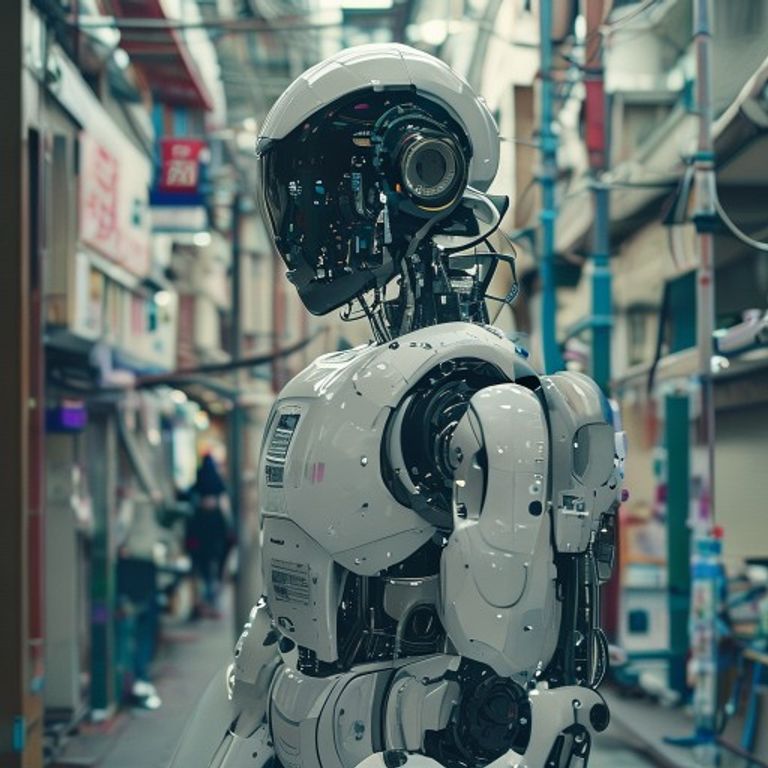
The most discussed example is AIREC, a 150-kilogram AI-powered humanoid robot being tested for physically demanding caregiving tasks like repositioning patients to prevent bedsores or assisting with diaper changes.
This matters because physical caregiving is brutally hard work.
Care workers routinely suffer back injuries from lifting patients. Many leave the industry from burnout. Humanoid robotics researchers increasingly argue that machines may not replace nurses — but they might extend how long humans can remain in these jobs.
At the same time, another category of robots is quietly gaining momentum: emotionally interactive AI companions.
Companies are building conversational robots designed specifically to reduce loneliness among elderly people living alone or in care facilities. Japan-based projects like Sobatomo are explicitly focused on “emotionally warm AI companionship.”
And this is where the story becomes emotionally complicated.
Because the Real Crisis May Not Be Physical Care
It may be isolation.
Japan has a word for lonely deaths: kodokushi.
People dying alone, undiscovered for days, weeks, sometimes longer.
One recent discussion around elderly isolation cited tens of thousands of people found dead alone in homes across Japan in 2025.
That statistic feels shocking until you understand the broader social shifts happening underneath it.
Families are smaller. Adult children often live far from parents. Marriage rates are declining. Communities have become less interdependent. And unlike previous generations, many elderly people today spend large portions of their lives interacting primarily with screens.
Loneliness is no longer viewed merely as sadness. Increasingly, it’s treated as a public health problem.
That changes how robots are positioned.
These systems are not only being sold as labor-saving tools. They’re being framed as emotional infrastructure.
A robot that remembers your birthday, asks whether you slept well, encourages you to stretch, or reminds you that your granddaughter visited last week may sound trivial from a technical perspective.
But emotionally, those moments can matter.
Especially when the alternative is silence.
The Strange Emotional Reality of AI Companionship
One reason this topic creates such visceral reactions is because it exposes an uncomfortable contradiction.
Most people instinctively dislike the idea of elderly parents bonding with machines.
It feels dystopian.
But many critics also underestimate how
Research and real-world deployments increasingly show that some seniors genuinely form attachments to conversational robots. Products like ElliQ — already used outside Japan as an AI companion for older adults — have shown measurable reductions in loneliness for certain users.
And honestly, this shouldn’t surprise us.
Humans already anthropomorphize everything.
People name cars. Apologize to vacuum robots. Talk to GPS voices. Feel guilty shutting down AI chatbots.
An 83-year-old widow speaking daily with a gentle conversational robot is not some bizarre futuristic anomaly. In many ways, it’s a continuation of deeply human psychological behavior.
Still, the emotional tension remains.
Because everyone understands the unspoken question:
Are robots solving loneliness — or helping society tolerate it?
The Ethical Debate Is Only Beginning
Critics worry that robotic companionship risks becoming an excuse for further social withdrawal.
If nursing homes deploy AI companions at scale, will governments invest less in human caregivers? Will families visit less often? Could emotionally intelligent systems create the illusion of care while masking institutional neglect?
These concerns are not hypothetical.
Some researchers studying elder-care robotics have warned that poorly implemented systems can actually increase workloads for caregivers or interfere with meaningful human interaction.
There’s also a dignity question.
An elderly person with dementia may emotionally bond with a machine that simulates empathy without actually experiencing it.
Is that compassionate?
Manipulative?
Or simply pragmatic?
The answer probably depends on outcomes.
If a lonely person feels calmer, safer, more engaged, and less depressed because of an AI companion, many families may decide philosophical purity matters less than emotional relief.
Especially when human alternatives are scarce.
That’s the uncomfortable reality driving this entire field.
Japan Is Quietly Becoming the Robotics Laboratory for the Rest of the World
What happens in Japan rarely stays in Japan anymore.
The country’s demographic future is increasingly becoming everyone else’s future.
South Korea, Italy, Germany, China, and eventually even parts of the United States are heading toward similar aging pressures.
Which means Japan’s elder-care robotics experiments are effectively early prototypes for global social infrastructure.
That has massive economic implications.
Humanoid robotics is suddenly attracting enormous investment not because companies expect robots to replace every worker tomorrow, but because aging societies create unavoidable demand.
The most important shift here may not be technical.
It may be cultural acceptance.
Once people become emotionally comfortable interacting with AI companions in elder care, similar systems could spread into childcare, therapy, education, hospitality, and even everyday home life.
A teenager practicing Japanese conversation with an AI humanoid.
A divorced office worker eating dinner while chatting casually with a household robot.
An elderly man in Osaka asking an AI assistant to replay stories about his late wife.
These scenarios no longer sound impossible.
They sound close.
But Robots Alone Won’t Solve the Deeper Problem
This is the part often missing from the technology narrative.
Japan’s loneliness crisis is not fundamentally an engineering problem.
It’s a social architecture problem.
Robots may reduce symptoms. They may support caregivers. They may genuinely improve quality of life for millions of elderly people.
That’s important and valuable.
But machines cannot fully replace intergenerational communities, family bonds, friendships, purpose, or social belonging.
In fact, one of the great ironies of modern technology is that societies can become hyperconnected digitally while emotionally fragmented in daily life.
Japan is confronting that contradiction earlier and more visibly than most nations.
And perhaps that’s why this story resonates globally.
Because beneath the robotics headlines is something deeply recognizable:
Modern societies are becoming older, more automated, more efficient — and in many cases, lonelier.
The Bigger Question Isn’t Whether Robots Will Enter Elder Care
They already are.
The bigger question is what role humans choose to keep for themselves.
Will robots become assistants that free caregivers to spend more meaningful time with patients?
Or will economic pressure slowly normalize machine-mediated companionship as a substitute for human presence?
The answer probably won’t arrive through one dramatic breakthrough.
It will emerge gradually.
In nursing homes.
In hospitals.
In apartments where elderly people quietly ask AI companions about the weather because nobody else called that day.
Japan is not building humanoid robots because it believes machines are better than people.
It’s building them because the country increasingly fears there may not be enough people left.
And that may turn out to be one of the defining social stories of the 21st century.