# The Invisible Leash: Why Your Living Room Feels Like a Cubicle
The laptop is sitting on the dining table. It stares at you. You aren't even working right now, but you can feel it. It's like a heavy weight in the room, even when the lid is closed.
When you work from home or freelance, there is no commute. There is no train ride to decompress. There is no office door to shut behind you. Instead, your professional life just. .. leaks. It leaks into your breakfast, your lunch, and your 10: 00 PM scrolling time. It's like trying to keep a cup of water from spilling when the cup has no lid.
We call it "flexibility, " but sometimes it feels more like being "always available. " And that is a very fast way to burn out.
The Ghost of the Office
In a traditional office, the physical space does the heavy lifting for your brain. When you walk into a building, your brain switches to "work mode. " When you leave, it switches to "human mode. "
When your office is your living room, that switch is broken.
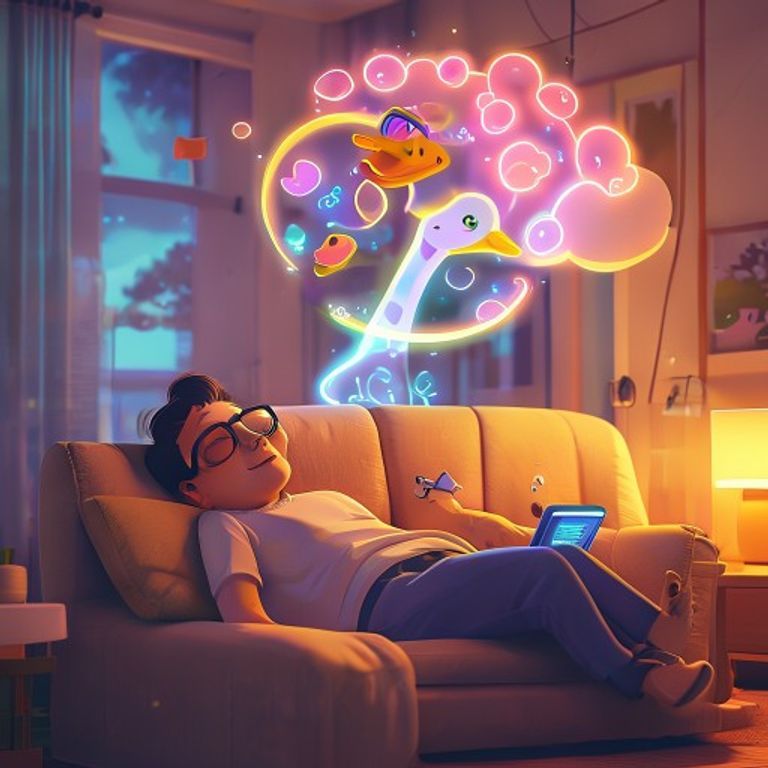
If you work from your couch, your brain starts to associate the couch with stress, emails, and deadlines. Suddenly, you can't even relax and watch a movie without thinking about that one spreadsheet you forgot to finish. You aren't resting; you're just working in a different posture.
It's a strange kind of tiredness. It's not the "I worked hard today" tired. It's the "I never actually stopped working" tired. It's the feeling that you are constantly standing in a hallway, waiting for something to happen.
The Myth of the "Quick Check"
We tell ourselves small lies to stay sane.
"I'll just check my email for five minutes before bed. " "I'll just answer this one Slack message while I'm making coffee. "
But five minutes turns into twenty. Twenty turns into an hour of shallow, anxious browsing. This is the "always-on" trap. When we allow work to bleed into our personal time, we aren't actually being more productive. We are just becoming more distracted.
Every time you check a work notification during dinner, you aren't just looking at a screen. You are pulling your mind out of the present moment. You are telling your brain that your relaxation isn't as important as that notification.
Over time, this erodes your ability to actually enjoy being alive.
Building Walls Where There Are None
Since we don't have physical walls to separate work and
First, consider the "Physical Anchor. " This doesn't mean you need a fancy home office with a mahogany desk. It just means you need a dedicated spot. If you work at the kitchen table, leave that spot when the day is done. If you work on a specific chair, get up from that chair the moment your timer goes off.
You need to tell your body: This space is for tasks. That space is for rest.
Second, try the "Mental Commute. " Since you don't have a drive to home, you have to invent one. This could be a fifteen-minute walk around the block, a specific playlist you listen to only after work, or even just changing your clothes.
Changing from "work clothes" to "home clothes" might feel silly, but it serves a purpose. It is a ritual. It is a signal to your nervous system that the hunt is over and it is safe to relax.
The Danger of the Digital Tether
Technology is designed to keep us looking. Apps are built by people whose entire job is to make sure you don't put your phone down. For a freelancer or a remote worker, this is a double-edged sword.
The same tool that allows you to work from a beach in Japan also allows a client to ping you at midnight on a Saturday.
Setting boundaries isn't about being rude. It's about being sustainable. If you tell a client, "I don't respond to messages after 6: 00 PM, " you aren't failing at your job. You are actually ensuring that you don't quit your job in a fit of rage three months from now.
A professional who knows how to rest is a professional who produces better work. An exhausted person just makes mistakes. Mistakes lead to more work. It's a cycle that never ends unless you break it.
The Quiet Reality of Limits
Life is a series of rhythms-breathing in and breathing out. Work is the same. There is a time for effort, and there is a time for recovery.
If you try to spend the whole day "inhaling" (working, producing, responding), you will eventually run out of air.
Being "always on" is a lie we tell ourselves to feel important or productive. But the most productive thing you can often do is nothing at all. Close the laptop. Walk away from the table. Let the silence be just that-silence.
The work will still be there tomorrow. The question is, will you be okay enough to do it?