The Day Your Dreams Get a Screenshot Button
The Day Your Dreams Get a Screenshot Button
For years, people thought dreams were safe. Private. Hidden away inside the brain like socks behind a washing machine. Weird socks. Scary socks. Sometimes socks that could suddenly talk in fluent French for no reason.
But now scientists are getting closer to peeking inside those dreams with AI.
Not fully. Not perfectly. Nobody is downloading Grandma’s dream about giant pickles riding skateboards. Yet. But the fact that researchers can already rebuild rough dream pictures from brain scans is enough to make everyone sit up straighter and quietly rethink every strange dream they’ve ever had.
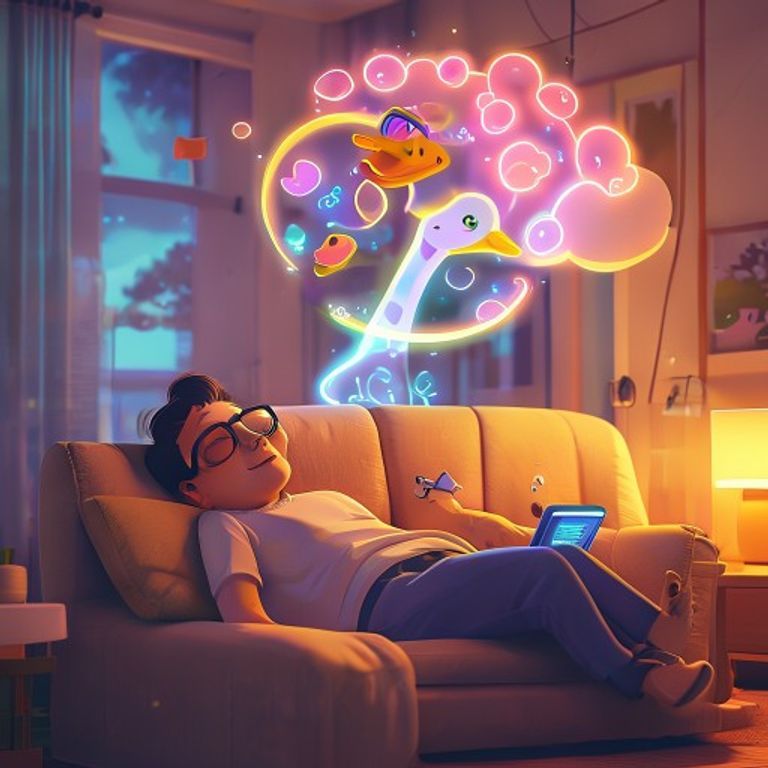
Especially the one involving a math test and a giraffe wearing sunglasses.
According to Demis Hassabis, AI is becoming surprisingly good at rebuilding what people see in their minds. Scientists place someone inside an fMRI scanner. The person imagines an image. The AI studies the brain activity and tries to recreate the picture.
Then comes the awkward part.
The AI asks, “Was this what you were thinking about?”
And the human has to answer something like, “Close. But the banana was angrier.”
That sentence alone would have sounded completely insane ten years ago.
The wild part is that this is not even science fiction anymore. In 2025, researchers at Fudan University introduced something called Neuropictor. The system used brain scans from sleeping people to rebuild snapshots from their dreams. Then AI stitched those snapshots into short videos.
Humanity really looked at the phrase “dream reconstruction technology” and said, “Yes. Let’s absolutely do that.”
Meanwhile, somewhere in the world, a tired scientist was probably watching blurry AI dream footage of someone being chased by a giant duck through a supermarket aisle.
Science has become wonderfully strange.
The funny thing is that dreams already feel AI-generated. They make almost no sense. One second a person is eating cereal. The next second they are late for school even though they graduated fifteen years ago. Then suddenly their dentist turns into a horse and starts giving career advice.
Dreams are basically the brain saying, “Good luck everybody,” before throwing random memories into a blender.
And now researchers are trying to organize that blender.
That takes courage.
It also raises many questions.
First question: what happens when dream recordings become clear enough to actually watch later?
Because humanity cannot handle that responsibly.
People barely survive group chats. Imagine adding dream-sharing apps into society.
“Bro, you have to see this dream I had.”
“No thanks.”
“Too late. I already uploaded the director’s cut.”
Social media would become complete chaos within hours.
Grandma joined social media and now thinks LOL stands for “Lots of Love.” She’s been sending it to everyone at funerals. Imagine explaining dream-streaming technology to her.
She would accidentally post a four-minute dream about dancing tomatoes and then ask why strangers are commenting fire emojis underneath it.
Tech companies would immediately create updates nobody asked for.
“Now with Dream Filters!”
“Add cinematic lighting to your nightmares!”
“Premium users can remove embarrassing dream scenes!”
Every app would suddenly want access to people’s brains.
Terms and conditions would become terrifying.
“By clicking agree, you allow us to collect thoughts involving beaches, pizza, or mild panic.”
Nobody reads those agreements anyway. People click “accept” faster than raccoons grabbing snacks from an open trash can.
Meanwhile advertisers would lose their minds.
Right now ads already follow people everywhere online. Someone searches for one blender and suddenly every website screams about smoothies for three weeks.
Now imagine dream-based ads.
A person dreams about hiking once.
The next morning every device says:
“Thinking about mountains lately?”
No thank you.
Another strange part is how close imagination and memory already are inside the brain. Hassabis explained that decades of neuroscience research show they use many of the same systems.
Which honestly explains a lot.
That is probably why people can remember embarrassing moments from 2009 with perfect detail at 2 AM while trying to sleep.
The brain stores humiliation in high definition.
But ask where the car keys are? Suddenly the brain becomes an empty cave with elevator music playing softly in the distance.
Scientists studying imagination and memory are basically exploring the world’s messiest storage room. The brain keeps important facts next to useless nonsense.
A person forgets their email password but remembers a commercial jingle from twelve years ago.
How?
Nobody knows.
The brain is like an attic run by squirrels.
Still, the technology behind this work is amazing. Researchers are combining fMRI brain scans with AI image models. The scanners track blood flow and activity in different brain areas. Then AI tries to connect those patterns with images.
At first the results looked blurry. Shapes. Colors. Rough outlines.
Now they are getting sharper.
That is the part making everyone stare nervously at the ceiling.
Because technology always starts small and weird before becoming normal.
The internet once sounded ridiculous too.
“So you’re telling me people will carry tiny computers in their pockets and use them mostly to argue about sandwiches?”
Yes. Exactly that.
The meeting could’ve been an email, but the email wouldn’t have wasted an hour of everyone’s life. Humanity has a special talent for building incredible technology and then using it in the dumbest possible ways.
So naturally people are wondering where thought-reading tools could lead.
Doctors could use them to help patients who
That possibility is beautiful.
Artists might someday sketch ideas directly from imagination. No pencils. No typing. Just thinking.
Though honestly some artists already look exhausted enough. Imagine trying to explain to AI why the cloud in your mental image needs “more emotional vibes.”
The AI would probably respond:
“Please define emotional cloud.”
Then there are gamers.
Gamers would absolutely try to speedrun dreams.
No hesitation.
Within days someone online would post:
“Beat my nightmare boss using only mental focus and leftover pizza.”
People would somehow turn brain interfaces into competitive sports.
And of course billionaires would wake up at 4 AM claiming dream optimization changed their lives.
“I read somewhere that billionaires wake up at 4 AM, so I tried it. Turns out, I’m not a billionaire, just sleep-deprived.”
Somebody would create a podcast called *Unlock Your Dream Potential* where a man with suspiciously shiny teeth explains how to monetize imagination.
Every episode would somehow involve cryptocurrency.
But beneath the jokes, there is something deeply fascinating here.
For thousands of years, dreams were mysterious. Ancient people thought they were messages from gods, spirits, or the future. Others believed dreams revealed hidden fears or wishes.
Now scientists are feeding dreams into computers.
Human history really took a sharp turn.
It feels almost impossible that a machine can look at brain activity and say, “Ah yes, this person was imagining a cat.”
Even stranger, the AI sometimes gets surprisingly close.
Not perfect. But close enough to make people whisper “whoa” at research papers.
The future suddenly feels much nearer than expected.
Sci-fi movies warned everyone about this moment for decades. Usually the scientists in those movies are standing in blue glowing rooms saying things like, “We’ve crossed a line.”
Then immediately something explodes.
Real life is less dramatic. Mostly it is researchers drinking cold coffee while staring at blurry brain images at 1 AM.
Still, the idea is huge.
Because once machines can decode visual thoughts even a little, the door opens wider.
Today it is rough dream pictures.
Tomorrow it could be clearer memories. Mental sketches. Maybe even silent communication between humans and machines.
And honestly humans are already bad enough at regular communication.
One person texts “K.”
Another person spends four hours wondering if the friendship is over.
Now imagine silent brain messaging.
Disaster.
A couple sits quietly at dinner while accidentally sharing thoughts.
“Did you remember to buy milk?”
“Why is he chewing so loudly?”
“Is that shirt shrinking or expanding?”
Relationships would not survive.
Even pets might get involved eventually.
Scientists would decode a dog’s thoughts only to discover the dog has been thinking about sandwiches for eleven straight years.
No deep wisdom. No hidden poetry.
Just:
“Ball. Snack. Outside. Ball again.”
Cats would somehow still refuse to cooperate.
Researchers could spend millions decoding feline thoughts only to receive a mental image of a cat knocking a glass off a table on purpose.
Which feels accurate.
There is also the question of privacy.
People protect passwords, phones, and diaries because thoughts feel personal. The brain is the final locked room.
So whenever brain-reading technology improves, people naturally get nervous.
Nobody wants targeted ads appearing because of a weird dream involving spaghetti and pirates.
Nobody wants a company saying:
“We noticed you imagined a vacation last night.”
That sentence alone could start a revolution.
The good news is that current systems still require huge scanners and careful setups. Nobody is secretly reading thoughts from across the street.
At least not unless someone invents a terrifyingly advanced microwave.
And honestly microwaves already behave suspiciously. One minute leftovers are freezing cold. The next minute the bowl is hotter than the surface of the sun.
Technology has trust issues.
Still, the speed of progress surprises people.
AI image tools improved incredibly fast. Voice cloning improved fast too. Now dream reconstruction is entering the chat like an uninvited cousin carrying fireworks.
Scientists used to ask whether something was possible.
Now they ask how soon it can happen.
Hassabis believes sci-fi-style brain interfaces could arrive within the next few years. That sentence sounds like it escaped from the future and wandered into the present wearing sunglasses.
Yet here we are.
Humans invented machines that can study imagination itself.
That is incredible.
Also slightly terrifying.
Mostly incredible though.
The funniest part may be how ordinary society will eventually make it all feel normal.
At first everyone panics.
Then three years later people casually say things like:
“My dream app updated last night.”
Children growing up with this technology will probably be confused that older generations ever thought it was strange.
They will sit in classrooms saying:
“Wait, people used to describe dreams using words?”
Yes, child. Ancient suffering.
Back then people woke up saying things like:
“It was hard to explain, but there was a penguin driving a bus.”
Now AI might just replay the penguin bus scene in 4K.
Humanity keeps building ladders into impossible places.
Sometimes those ladders lead to amazing discoveries.
Sometimes they lead to people arguing online about whether dream videos need subtitles.
Probably both.
And somewhere tonight, inside a quiet research lab, a scientist will stare at fuzzy dream footage while a computer hums softly nearby. Coffee cups will pile up. Screens will glow. Someone will point excitedly at a blurry shape and say:
“I think that’s a bicycle.”
Another scientist will squint harder.
“No,” they’ll whisper. “I think it’s a llama.”
And honestly, with dreams, both answers could be correct.