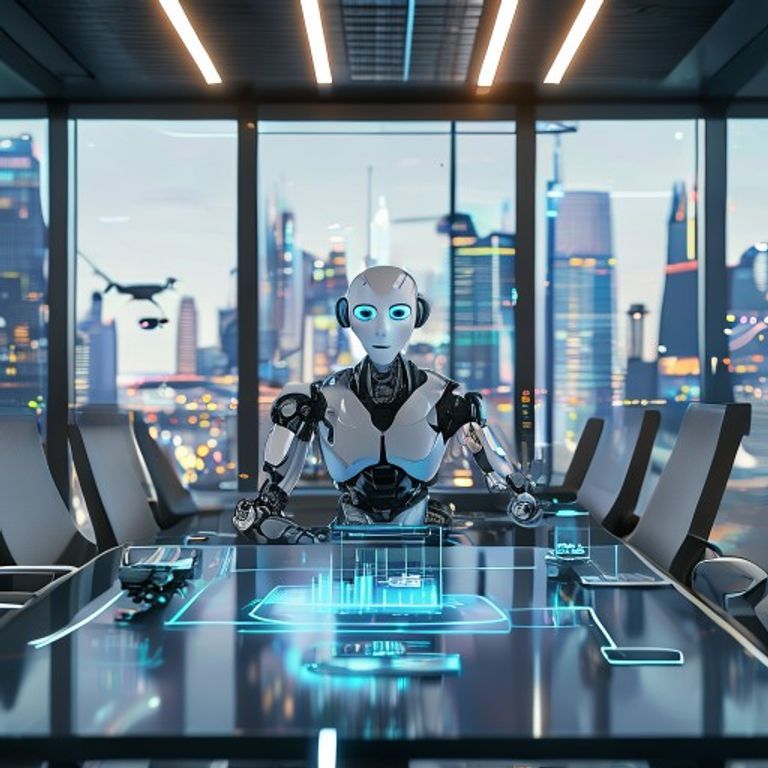
The Growing Pains of Letting Go
sometime recently, a business owner called me. He sounded like he hadn't slept in a week. He told me he felt like he was watching his own company sail away from him on a boat he wasn't allowed to steer.
He had spent years building everything by hand. He knew every invoice, every client's middle name, and exactly which drawer the spare keys were in. But lately, things were changing. He was hiring people. He was using software. He was trying to "scale. "
And suddenly, he felt invisible.
It is a strange, quiet kind of panic. You work so hard to create something, and then, as soon as it starts working, you feel like you're losing it.
The Illusion of Total Control
When a business is just two people in a garage, control is easy. You are the system. If a mistake happens, you see it happen. You fix it with a quick chat or a manual correction. It feels safe.
But growth changes the math.
As you add more customers and more staff, you can't be everywhere at once. You can't check every email or approve every tiny expense without becoming the very bottleneck that kills your progress.
Many leaders mistake "being involved in every detail" for "having control. "
In reality, if you have to touch every single part of your business to make sure it works, you don't own a business. You own a very stressful, very complicated job.
The Fear of the "Black Box"
One of the biggest hurdles to growing is the shift from manual work to automated systems.
Think about it. When you do something manually, you see the gears turning. You see the pen hitting the paper. When you switch to a software system or a delegated process, it feels like a "black box. " Data goes in, something happens inside the computer or in another department, and a result comes out.
It's unnerving. You start wondering:
- Is the software actually doing what it says?
- Is the team cutting corners?
- What happens if the internet goes down or the data gets messy?
This fear is natural. It's the brain's way of trying to protect what you built. But there is a vital difference between blind trust and verified systems.
True control doesn't come from doing the work
Moving from "Doing" to "Watching"
Scaling requires a psychological shift. You have to move from being the person who drives the car to being the person who monitors the dashboard.
If you are staring at the road through the windshield, you are driving. If you are looking at the fuel gauge, the speedometer, and the engine temperature, you are managing.
This is where most people stumble. They try to do both at once. They try to steer the wheel while also trying to read the report on the seat next to them. It leads to burnout, bad decisions, and a very messy office.
Visualizing your business through data is the only way to reclaim your sanity. You need "tripwires. " These are small, specific indicators that tell you, "Hey, something is slightly off here, go take a look. "
If you wait until the bank account is empty to realize a process is broken, you weren't in control; you were just a passenger on a slow-motion crash.
The Human Element
We often talk about software, but we forget about the people. When you scale, you aren't just adding tasks; you are adding personalities, biases, and bad moods.
You might have a great automated system for orders, but if your new manager has a habit of forgetting to check the error logs, the system fails.
Scaling is essentially the art of building "guardrails. " You create rules and workflows so that even when a human has a bad day, the business keeps moving in the right direction.
It's not about micromanaging. It's about making the right way the easiest way.
The Quiet Truth
Growth is uncomfortable. It is a constant tug-of-war between the safety of the "old way" and the efficiency of the "new way. "
If you feel like you are losing control, it might actually be a sign that you are finally succeeding. You are moving from a person who performs tasks to a person who designs systems.
That transition is lonely. It's quiet. And it feels a lot like being left behind.
But remember: the goal of a business isn't to keep you busy forever. The goal is to build something that can eventually run without you needing to hold its hand every single hour of the day.
Are you building a cage for yourself, or are you building a machine?