The Weight of the Unpaid Hour
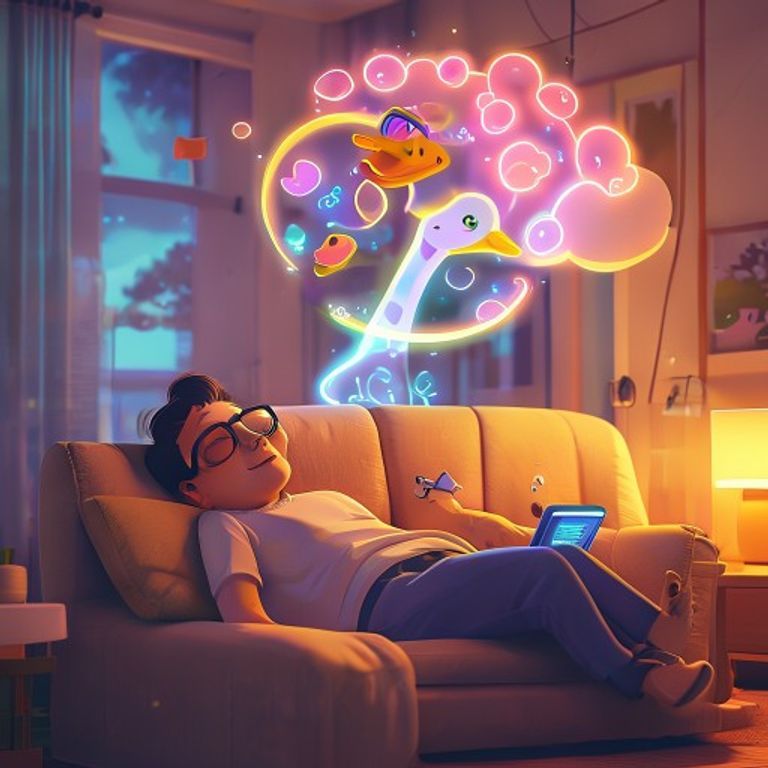
It happens around 9: 00 PM on a Tuesday. You are finally sitting on the couch, or maybe you are just staring at a bowl of cereal, and then it hits you. That tiny, sharp little sting in your chest. It is the feeling that you should be doing something else.
You aren't working. You aren't actively answering an email, fixing a bug, or talking to a client. But you feel like you should be.
For anyone running their own show-whether it is just you or a tiny team of three-this is a very common ghost that haunts the room. It is a low-level, constant humming of guilt. It tells you that if you aren't "on, " you are losing. If you aren't grinding, you are failing.
It is hard to turn off the brain when your brain is also the CEO, the janitor, and the accountant.
The Math of Anxiety
When you work for a big company, the clock is a boundary. You punch in, you do your stuff, and eventually, you go home. The company pays you for your time, but they don't necessarily own your soul 24/7.
But when you are the founder, the math changes. You start looking at your bank account and seeing numbers that represent your time, your risks, and your family's stability.
Every hour you spend watching a movie or playing a video game feels like a withdrawal from your future success. It becomes a weird, mental calculation: "If I sleep an extra hour, does that cost me a new client? " "If I take this weekend off, am I letting my competitors win? "
It feels like every minute of rest is a minute of wasted potential. This isn't just laziness; it's financial anxiety dressed up as a work ethic. We have been taught that hard work is the only way to survive, so when we stop working, our brain signals an alarm. It's like a smoke detector going off because you're just making toast.
The Illusion of the "Always On" Founder
There is this myth we see online. We see people posting about their 14-hour days and
But there is a practical problem with that.
A machine that runs at 100% capacity all the time eventually overheats. And when a machine breaks, it stays broken for a long time. Humans are much the same.
If you are always "on, " you stop making good decisions. You start making "tired" decisions. You send an email that is slightly too blunt because you're frustrated. You overlook a small error in a contract because your eyes are glazing over. You choose the easy path because the smart path requires energy you simply don't have left.
Efficiency isn't about how many hours you spend looking at a screen. It is about the quality of the thoughts you have while you are looking at it. Sometimes, the best business decision you make happens while you are walking the dog or staring at a wall.
Finding the Off Switch
So, how do you actually stop the guilt? You can't just tell your brain to "shut up, " because it's very good at ignoring you.
You have to build systems.
Maybe it is a physical ritual. When you close your laptop, you put it in a drawer. Out of sight, out of mind. Or maybe it is a scheduled "do nothing" time. If you decide that 7: 00 PM to 9: 00 PM is officially "unproductive time, " you turn the guilt into a completed task. You aren't "slacking off"; you are "executing the scheduled rest protocol. "
It sounds silly, but treating rest like a business requirement helps.
We have to realize that our value isn't measured by how much we suffer. Being a founder is a marathon, not a sprint. If you sprint the first three miles of a marathon, you aren't a hero; you're just someone who is going to collapse before the finish line.
The goal is to build a business that can survive your absence. If your entire income depends on you being a nervous wreck every single second, you haven't built a business-you've just built a very stressful job for yourself.
It is okay to be offline. The world will still be there when you get back. And you will be much better at handling it.