# The Ghost of Tasks Past: Why Half-Done Work is Draining Your Brain
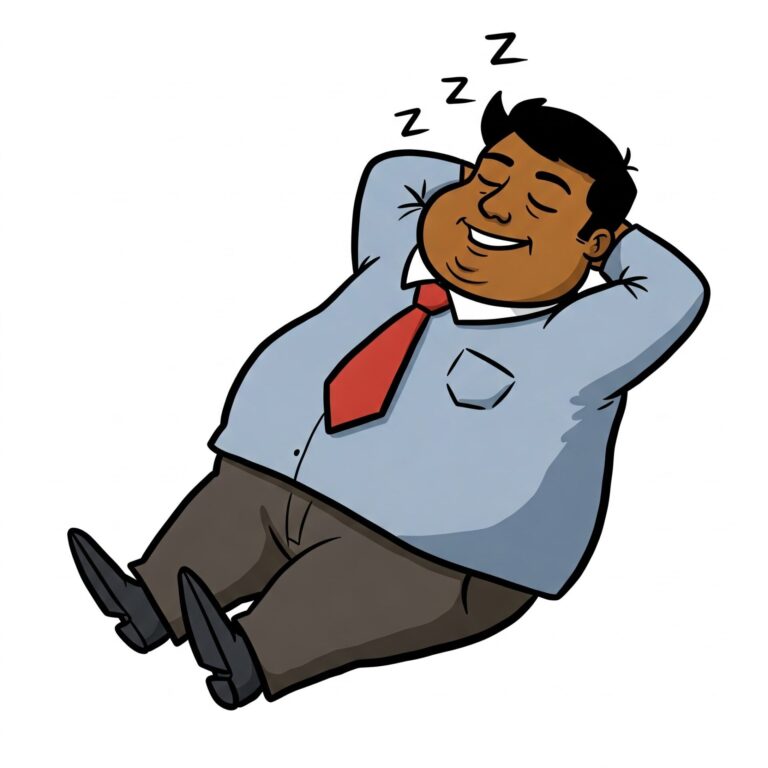
It's 3: 00 PM on a Tuesday, and you are staring at a screen, but you aren't actually doing anything. You feel heavy. Not "I ate too much pizza" heavy, but a weird, mental tiredness that makes your brain feel like it's stuck in wet cement.
You look at your to-do list. There are three big projects there. But none of them are actually "done. " One is a half-finished report. One is an email chain that died three days ago. One is a spreadsheet that you started but haven't touched since Monday.
Suddenly, you feel exhausted, even though you haven't actually accomplished much today.
This is the mental tax of unfinished business. It is a silent thief that steals your energy without you even noticing.
The Weight of the "Open Loop"
Think about your brain like a computer. When you open a new tab in a web browser, it uses a little bit of memory. If you open ten tabs, the computer starts to slow down. It gets hot. The fan starts spinning loudly.
Your brain does the exact same thing.
Every unfinished task is like an open tab. Psychologists sometimes call this the Zeigarnik Effect. It is a fancy way of saying that our brains are hardwired to remember incomplete tasks much better than completed ones.
Your brain doesn't want to let go. It keeps looping that half-finished project in the background of your mind. It's constantly whispering, "Hey, don't forget about that email, " or "You still haven't fixed that error in the document. "
Even when you are trying to relax, watching a movie, or eating dinner, those "open loops" are still running in the background. They are draining your battery, even while you are sitting still.
Why Momentum Dies in the Middle
We often think that starting something new is the hard part. Usually, it is. But there is a different kind of danger in the middle.
When we start a project, we have high energy. We have excitement. But halfway through, the novelty wears off. The work gets boring, repetitive, or difficult. This is where many people make a mistake: they start something else to get that "new project" high.
If you do this enough times, you end up with a graveyard of half-finished ideas.
A graveyard of projects is a heavy place to live. It makes you feel like you are always busy
Success isn't just about how much you start. It is about how much you close.
Managing the Lifecycle
So, how do we stop the drain? It isn't about working harder or drinking more coffee. It is about managing the "lifecycle" of your work. This just means being careful about how things start, how they move, and-most importantly-how they end.
One way to handle this is to stop treating every task like a giant mountain. If a task is too big, your brain sees it as a threat. It sees it as a huge, looming cloud of effort. This makes you want to avoid it.
Instead, try to find the "definition of done" for small chunks. Don't try to "Finish the Marketing Plan. " That is too big. Instead, try to "Write the first three bullet points for the header. "
When you finish a small chunk, you close a little loop. You give your brain a tiny hit of dopamine. You tell your mind, "See? We finished something. "
Another trick is to be Ruthless with your "Maybe" pile. Sometimes, we keep tasks on our list because we feel guilty about dropping them. We think, "I should probably do this eventually. "
But "eventually" is a lie we tell ourselves.
If a task has been sitting on your list for three weeks and you haven't touched it, it probably shouldn't be on your list. Delete it. Or move it to a separate "Someday" list that you only look at once a month. This clears the mental tabs and lets your brain breathe.
The Importance of the Finish Line
There is a certain peace that comes with finishing.
It is a quiet, simple feeling. It is the moment you hit "Send" on a long email. It is the moment you close a file and move it to the "Completed" folder. It is the moment you can actually stop thinking about work.
We spend so much time worrying about being productive that we forget that being finished is the actual goal. Productivity is just the tool we use to get to the end.
If you find yourself feeling burnt out today, stop looking at what you need to start. Look at what you can finish.
Pick one small, nagging thing. Something that takes ten minutes. Close that loop. Feel the weight lift, even if just a little bit.
Sometimes, the best way to move forward is to stop starting and start finishing.