The High Cost of Always Being "On"
A laptop screen glowing in a dark room at 2: 00 AM is a common sight for people working for themselves. It feels like progress. It feels like you are winning the race. But usually, that late-night grind isn't building an empire; it is just building a massive amount of exhaustion.
When you are a solopreneur, you are the CEO, the marketing team, the accountant, and the person who has to fix the printer. There is no manager to tell you to go home. There is no HR department to say you have taken too many sick days. The only person holding the leash is you.
And most of the time, you are a very demanding boss.
The "Hustle Culture" trap is real. We see people online talking about waking up at 4: 00 AM, working twelve hours straight, and "crushing it" every single day. It sounds great in a motivational video. But in the real world, humans aren't machines. Machines are designed to run until they break or until they are turned off. Humans are biological systems that need cycles.
If you try to operate like a machine, you will eventually experience a glitch. And for a person, that glitch looks like burnout, brain fog, or just plain hating the thing you used to love doing.
The Myth of Constant Productivity
There is a big difference between being busy and being effective.
Being busy is answering fifty emails in an hour, even if none of them actually move your business forward. It is moving tasks from one pile to another just to feel like you did "something. " Being effective is sitting down for two hours of deep, focused work that actually solves a problem.
Here is the problem: you cannot do deep work when your brain is fried.
Think of your brain like a smartphone battery. When it is at 100%, everything is fast and snappy. Apps open instantly. But as the battery drops to 15%, the phone starts to struggle. It slows down. It gets hot. It might even shut down unexpectedly.
Most solopreneurs try to run their entire business on 5% battery every single day. They wonder why they are making silly mistakes or why it takes three hours to write a simple paragraph. It isn't because they are lazy. It is because they are running on empty.
Rest is not a reward for finishing your work. Rest is a requirement for doing your work well.
How Decision Fatigue Kills Momentum
Every single choice you make, no matter how small, uses up a little bit of mental energy.
Choosing what to wear, deciding what to eat for lunch, or figuring out which client to email first-each of these takes a tiny slice of your willpower. For a solopreneur, the number of decisions is staggering. You aren't just deciding on
By 4: 00 PM, many people hit a wall. This is called decision fatigue. You start making bad choices. You might spend an hour scrolling through social media because your brain is too tired to choose a productive task. Or you might agree to a project that you actually don't have time for, simply because saying "no" feels like too much effort.
This is where recovery time becomes a competitive advantage.
When you take intentional breaks, you aren't "wasting time. " You are resetting your decision-making meter. You are giving your brain the space to clear out the mental clutter so that when you sit down to work, you can actually choose the right path.
The Art of Strategic Disconnection
So, how do you actually recover without feeling guilty?
It starts by realizing that "doing nothing" is actually a very productive activity for your subconscious mind. Have you ever noticed that your best ideas come to you in the shower, or while walking the dog, or just sitting quietly with a cup of tea?
That isn't a coincidence.
When you stop actively focusing on a problem, your brain moves into what scientists call the "default mode network. " This is when your mind starts making connections between different pieces of information. It is solving the problem in the background while you are busy looking at trees.
If you never stop, you never give your brain the chance to find those breakthroughs.
A few practical ways to build this into a business:
- Create Hard Stop Times: Decide that at 6: 00 PM, the "office" is closed. Even if it's just a corner of your living room, close the laptop and walk away.
- Scheduled Boredom: Give yourself fifteen minutes a day where you aren't looking at a screen. No podcasts, no music, no scrolling. Just sitting. It feels weird at first, but it works.
- The Weekend Rule: Try to have at least one full day where you do not check your email. The world will not end. Your clients will (usually) be okay.
Sustainable Growth vs. Rapid Burnout
There is a certain pride in the struggle. We like to think that the harder we work, the more successful we will be. But business is a marathon, not a sprint.
If you run a marathon at a sprinter's pace, you will collapse after the first two miles. You might look impressive for a moment, but you won't finish the race.
A solopreneur's greatest asset isn't their software, their website, or their product. Their greatest asset is their ability to think clearly and make good decisions. Protecting that asset requires more than just hard work. It requires the wisdom to know when to stop.
In the end, the goal isn't to work until you break. The goal is to build something that allows you to live a life worth working for.
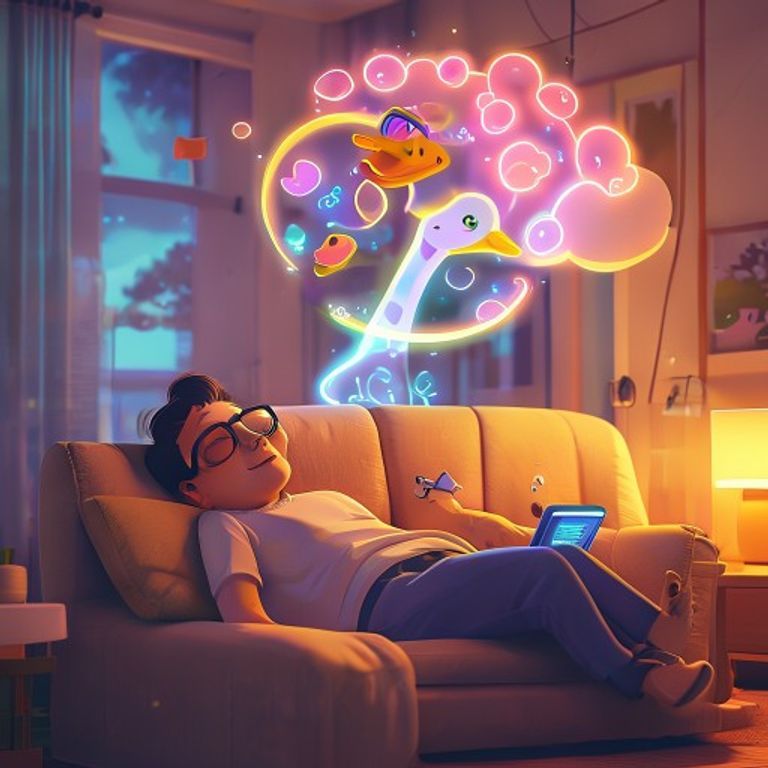
Maybe the most productive thing you can do today is actually take a nap.