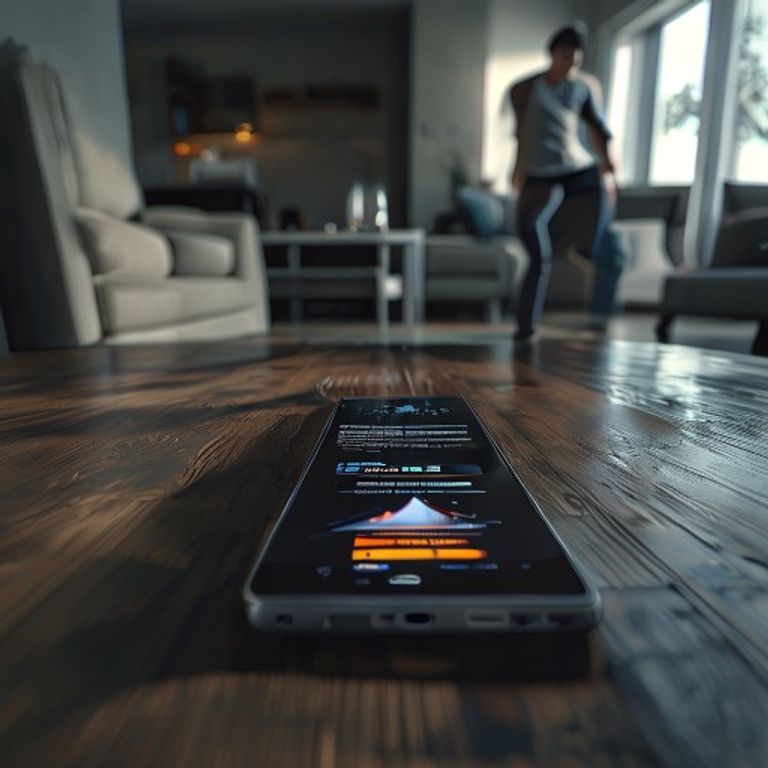
A photorealistic image of an Android smartphone displaying an earthquake alert on a wooden desk, while a person quickly takes cover in a home setting.
Most people think their phone’s biggest job is sending texts, showing cat videos, or reminding them they forgot someone’s birthday again. But Android phones can also help warn people about earthquakes. Which is honestly impressive for a device that still autocorrects “okay” into “okra.”
Google’s Android earthquake alert system can warn users a few seconds before strong shaking starts. That may not sound like much time, but during an earthquake, even a few seconds can matter a lot. It can give people enough time to move away from windows, stop a car, or avoid becoming part of the living room furniture.
The system works by using tiny sensors already built into smartphones. These sensors are called MEMS accelerometers. Normally, they do simple jobs, like rotating the screen when someone turns the phone sideways to watch videos they definitely planned to watch for only five minutes.
But these sensors can also detect movement from earthquakes.
When an earthquake begins, it first sends out P-waves. These waves travel fast but are usually weaker and less dangerous. After that come the stronger S-waves, which cause the heavy shaking people actually feel. The Android system tries to detect the early P-waves before the stronger waves arrive.
If many nearby phones that are sitting still suddenly detect the same strange movement, they quietly send anonymous location information to Google’s servers. One phone alone could just belong to someone dropping it while reaching for snacks. Phones are dropped every day. Some survive. Some become modern
But when lots of phones notice the same motion at the same time, the system realizes an earthquake may be happening.
Google’s algorithms then study the information from many devices together. They estimate where the earthquake started and how strong it is. Once the system confirms the quake, alerts are quickly sent to people in areas that may soon feel strong shaking.
The warning travels through the internet much faster than the earthquake’s destructive S-waves move through the ground. That speed difference is what gives people those important extra seconds.
The technology builds on research from UC Berkeley’s MyShake project, which explored how smartphones could work together like a giant earthquake detector. It’s a clever idea. Millions of phones already exist, already have sensors, and are already lying on tables while their owners promise they are “definitely going to sleep early tonight.”
Instead of building expensive new equipment everywhere, the system turns ordinary phones into part of a huge detection network.
Of course, the alerts are not magic. They cannot predict earthquakes days ahead like some movie scientist staring dramatically at blinking screens. The system only reacts once a quake has already started. But because earthquakes travel slower than internet signals, the alerts can still arrive before the strongest shaking does.
That tiny head start can help save lives.
It’s also a strange little reminder that modern phones are doing far more than anyone expected years ago. A small rectangle that once played Snake games and survived one fall from a pocket now helps detect seismic waves deep underground. Meanwhile, some people still need three alarms just to wake up for their work.
Technology is funny like that.